Spelling mistakes can sneak into writing even when the word looks correct. One of the most common examples involves the confusion between training vs trainning. Both words may appear online, yet only one follows correct English grammar rules.
If you have ever paused while typing and wondered whether the correct spelling is training or trainning, you are not alone. Students, bloggers, professionals, and even native English speakers often make this mistake. The confusion usually comes from the rules surrounding adding “-ing” to verbs and the way English sometimes doubles consonants.
This guide explains everything you need to know. You will learn the correct spelling, the grammar rule behind it, the meaning of the word training, and how to use it correctly in real world situations. By the end of this article, the difference between training and trainning will be crystal clear.
Quick Answer: Is It Training or Trainning?
Let’s start with the direct answer.
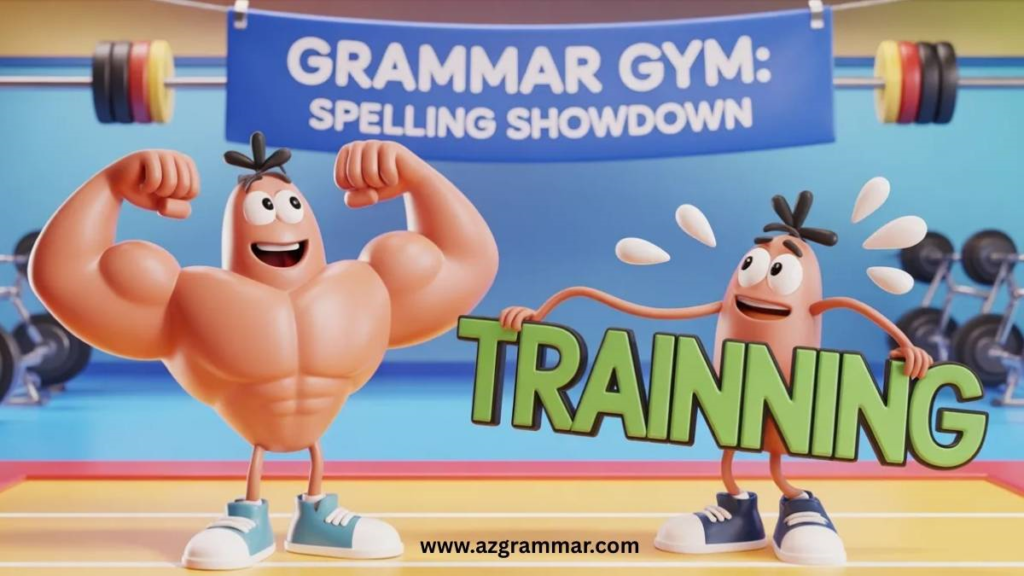
- Training is the correct spelling.
- Trainning is a spelling mistake.
- The word training describes the process of learning skills through instruction, practice, or experience.
Major dictionaries confirm this spelling, including:
- Oxford English Dictionary
- Merriam-Webster
- Cambridge Dictionary
None of these authoritative sources recognize trainning as a standard word.
So whenever you hesitate between training or trainning, the correct choice is always training.
Shakey or Shaky: Clear Meaning with Easy Examples
What Does “Training” Mean?
The word training plays an important role in many aspects of life. It refers to the process of learning or teaching skills in a structured way.
Simple Definition
Training: the process of teaching or learning skills through practice, instruction, and experience.
Training helps individuals improve performance and develop abilities in specific areas.
Common Types of Training
| Type of Training | Description |
|---|---|
| Workplace training | Teaching employees job-related skills |
| Athletic training | Improving physical performance |
| Academic training | Learning specialized knowledge |
| Technical training | Developing practical technical skills |
Examples of Training in Real Life
- A company may provide leadership training for managers.
- Athletes follow strict training programs before competitions.
- Pilots complete thousands of hours of flight training before flying commercial aircraft.
Training helps people gain expertise and perform tasks more effectively.
The Grammar Rule Behind “Training”
Understanding the grammar rule explains why training is spelled with only one n.
When English verbs add the suffix -ing, sometimes the final consonant doubles. However, this only happens under specific conditions.
The Consonant Doubling Rule
A consonant doubles before -ing when:
- the word ends in consonant–vowel–consonant
- the final syllable is stressed
Grammar Examples
| Base Word | Correct Form | Explanation |
|---|---|---|
| run | running | consonant doubled |
| swim | swimming | consonant doubled |
| train | training | no doubling |
| read | reading | vowel pattern prevents doubling |
The verb train does not meet the conditions required for doubling the consonant. Therefore the correct spelling becomes:
train + ing = training
Adding an extra n creates the incorrect spelling trainning.
Why “Trainning” Is Incorrect
If the grammar rule is clear, why do people still write trainning?
There are several reasons behind this common mistake.
Misunderstanding the Doubling Rule
Many people believe every verb doubles the final consonant when adding -ing. Words like running and swimming reinforce this belief.
Influence of Similar Words
When writers frequently see double-letter words, they may assume the same pattern applies everywhere.
Typing Mistakes
Fast typing often creates accidental double letters.
Lack of Grammar Awareness
Some writers simply have not learned the specific rules that determine when consonants double.
Although trainning may appear online occasionally, it does not follow standard English spelling rules.
The Origin of the Word “Training”
The word training has an interesting linguistic history.
It comes from the verb train, which entered English through Old French. The original word traîner meant to pull or guide along a path.
Over time, the meaning evolved.
Through or Throught: Avoid This Common Mistake
Historical Development of the Word
| Time Period | Meaning |
|---|---|
| Old French | guide or pull along |
| Early English | instruct or discipline |
| Modern English | develop skills through practice |
This evolution explains why training now refers to teaching and learning skills.
For example, in medieval times a craftsman would train apprentices to learn a trade. Today, companies train employees and athletes train for competitions.
How “Training” Is Used in Different Contexts
The word training appears in many industries and fields. Its meaning remains consistent: developing skills through structured learning.
Workplace Training
Companies invest heavily in employee training programs.
Examples include:
- leadership training
- safety training
- communication training
- management development programs
According to research by the Association for Talent Development, organizations that invest in employee training generate 218% higher income per employee.
Sports Training
Athletes depend on rigorous training schedules.
Examples:
- endurance training
- strength training
- tactical training
Professional athletes often train five to six days per week to maintain peak performance.
Academic and Technical Training
Education also involves specialized training.
Examples:
- medical training
- engineering training
- vocational training
- software development training
For instance, doctors in the United States complete 11–15 years of training before practicing independently.
Training therefore plays a vital role in professional success and skill development.
Training in Everyday Examples
The word training appears frequently in everyday communication.
Sentence Examples
- She completed her training program before starting her new job.
- The company offers leadership training to future managers.
- The athletes followed an intense training routine before the championship.
- Proper training improves workplace safety and productivity.
These examples show that the word is widely used in both casual conversation and professional writing.
Training vs Trainning: Quick Comparison
To summarize the difference clearly, compare the two spellings side by side.
| Word | Status | Explanation |
|---|---|---|
| Training | Correct spelling | Recognized by dictionaries |
| Trainning | Incorrect spelling | Common typo |
Whenever you write the word, remember that training includes only one “n.”
Common Spelling Mistakes Similar to “Trainning”
The confusion between training vs trainning reflects a larger issue in English spelling.
Many words create similar mistakes.
Tased or Tazed: Grammar, and Correct Usage
Examples of Common Errors
| Incorrect | Correct |
|---|---|
| Trainning | Training |
| Begining | Beginning |
| Planing | Planning |
| Stoping | Stopping |
These errors occur because writers misunderstand the rules governing consonant doubling.
Learning these rules helps improve spelling across many words.
Synonyms and Related Words for “Training”
English offers several related words that describe learning and skill development.
Common Synonyms
- coaching
- instruction
- practice
- preparation
- education
- development
Vocabulary Comparison
| Word | Meaning |
|---|---|
| Training | structured skill development |
| Coaching | guidance from an expert |
| Practice | repeated activity to improve skill |
| Education | formal learning in schools |
Although these words overlap, training typically focuses on practical skill development.
Easy Tricks to Remember the Correct Spelling
If you struggle with spelling training, simple memory tricks can help.
Spelling Rule Trick
Remember the structure:
train + ing = training
No extra consonant appears.
Visual Trick
Break the word into two parts:
TRAIN + ING
Seeing the word this way prevents adding an extra letter.
Writing Tip
Before adding -ing to a verb, ask yourself whether the consonant should double.
In many cases, including train, it does not.
Career or Carrer: The Correct Spelling Finally Explained
Reference Cambridge Dictionary Definitions
Here’s a trusted source for clear Grammar:
FAQs Training vs Trainning
Is it training or trainning?
Training is the correct spelling. Trainning is a common spelling mistake and is not recognized by standard English dictionaries.
Why is training spelled with one “n”?
The verb train does not follow the consonant doubling rule before adding -ing, so it becomes training, not trainning.
Is trainning a real word?
No. Trainning is considered a typo or spelling error. The correct form used in English is training.
What does training mean?
Training refers to the process of learning or teaching skills through instruction, practice, and experience.
How do you use training in a sentence?
Example: The company provided training to help employees improve their technical skills.
What is the difference between training and practice?
Training usually involves structured instruction or guidance, while practice focuses on repeating an activity to improve skill or performance.
Where is the word training commonly used?
The word training is commonly used in contexts such as workplace training, sports training, technical training, and educational programs.
Final Thought
The confusion between training vs trainning is easy to understand because English spelling rules can sometimes feel inconsistent. However, once you know the rule, the answer becomes simple. Training is the correct spelling, while trainning is just a common typing or spelling mistake.
The word training refers to the process of learning and developing skills through practice, instruction, and experience. You will see it used in many areas of life, including workplace training, sports training, and academic training.
A helpful way to remember the spelling is to break the word into two parts: train + ing = training. No extra “n” is needed.
If you keep this rule in mind, you’ll never hesitate again when deciding between training or trainning, and your writing will always look clear, accurate, and professional.

James Walker is an English language educator and grammar enthusiast dedicated to helping learners improve their writing and communication skills. As an author at AZ Grammar, he simplifies complex grammar rules into clear, practical lessons suitable for students and beginners. With a passion for language learning and education, James focuses on making English grammar easy, understandable, and useful for everyday communication and academic success worldwide.
Email: azgrammar29@gmail.com
Website: azgrammar.com