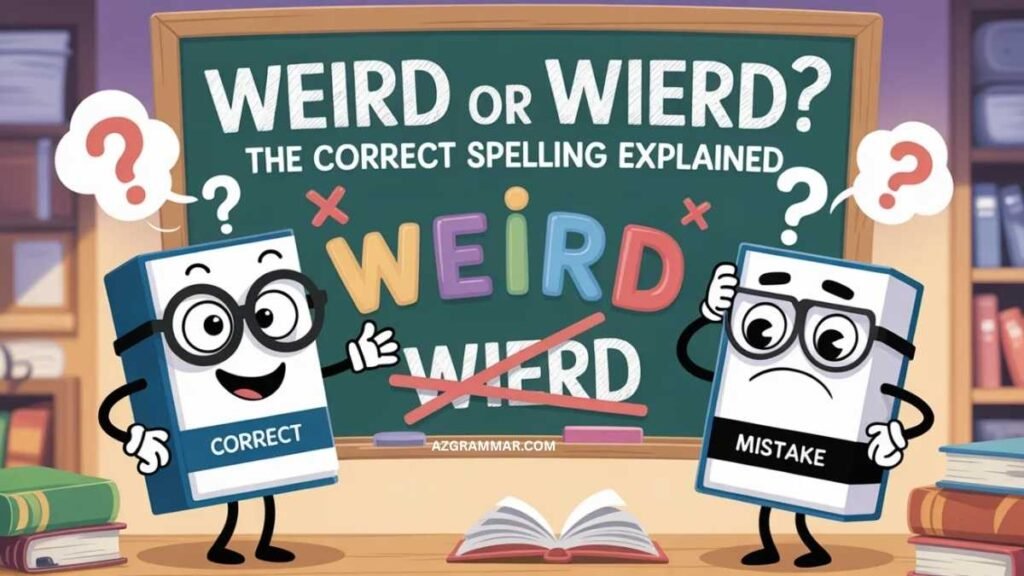
Ever caught yourself typing “weird or wierd” and suddenly questioning everything you thought you knew about English? You’re not alone. This tiny five-letter word has confused millions, and honestly, it feels a little… weird. You might remember the famous rule, “i before e except after c,” then realize this word completely ignores it. Classic English, right? It’s like the language decided to play a prank on you. However, don’t worry. In this guide, you’ll finally settle the weird or wierd debate once and for all. By the end, you’ll spell it correctly every time without second-guessing yourself. Let’s clear up the confusion in a simple, memorable way.
Weird or Wierd – Quick Answer
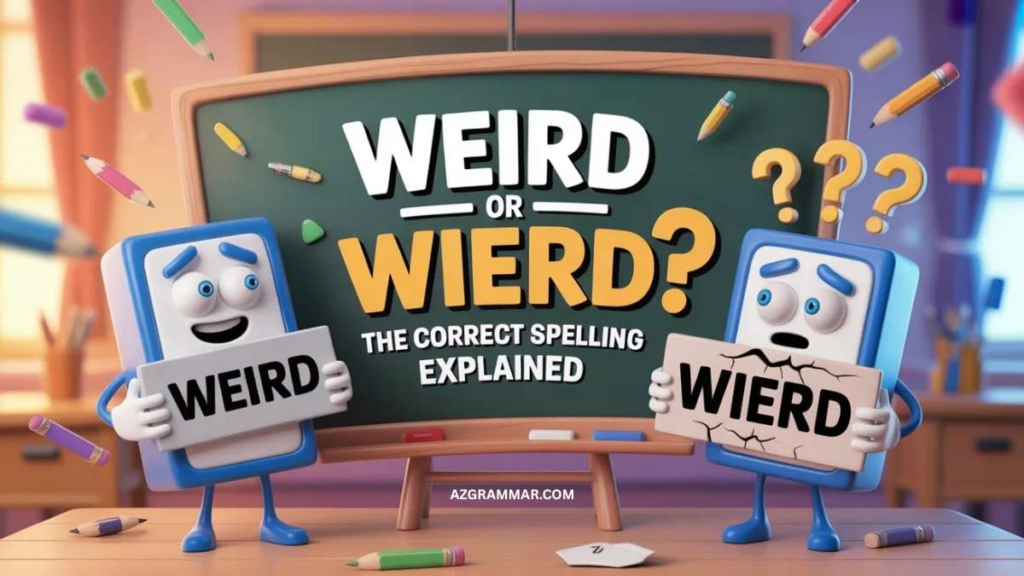
Let’s clear it up immediately:
- “Weird” is correct.
- “Wierd” is incorrect.
That’s it. If you remember nothing else, remember this.
However, understanding why helps you avoid the mistake forever. So let’s break it down.
Useing or Using: The Correct Spelling Explained Clearly
What Does “Weird” Mean?
The word “weird” is simple, yet flexible. You’ll see it everywhere, from casual conversations to novels.
Basic Meaning
- Strange or unusual
- Something that feels out of the ordinary
Deeper Meaning
- Sometimes it describes something mysterious or supernatural
- In older texts, it relates to fate or destiny
Examples in Real Life
- “That was a weird dream.”
- “This weather feels weird today.”
- “He has a weird sense of humor.”
Think of it this way: if something makes you pause and think, “That’s not normal,” it’s probably weird.
Why Do People Confuse “Weird” and “Wierd”?
This confusion isn’t random. It actually comes from how English works.
Main Reasons
- Sound vs spelling mismatch
The word sounds like “weerd”, so your brain tries to spell it logically. - The famous spelling rule
You’ve heard it: “i before e except after c.” - Typing habits
Fast typing leads to letter swaps. Your fingers often betray you. - Visual memory errors
People remember patterns. If the pattern feels wrong, they “fix” it incorrectly.
Real Example
You think:
“It should be ‘ie’ because that’s the rule.”
But English quietly says:
“Not this time.”
The Spelling Rule: “I Before E Except After C” (And Why It Fails Here)
This rule helps. It also misleads.
The Rule Explained Simply
- Usually: i comes before e
- believe, friend, piece
- After “c”: e comes before i
- receive, ceiling
Where “Weird” Breaks It
- “Weird” uses “ei”, even though there’s no “c”
- That makes it an exception
Other Words That Break the Rule
- weird
- height
- foreign
- neighbor
English is full of exceptions. In fact, some linguists argue there are more exceptions than examples.
Key Insight
Rules are helpful guides. They’re not laws.
Is “Wierd” Ever Correct?
Let’s be direct.
- No, “wierd” is never correct.
Why?
- It doesn’t exist in standard dictionaries
- It’s considered a spelling error, not a variation
- Grammar tools like Grammarly flag it instantly
What Happens If You Use It?
- Your writing looks less professional
- Readers may question your credibility
- Search engines may treat it as low-quality content
In short, it’s a mistake worth fixing.
Studder or Stutter – Which Spelling Is Correct?
Weird vs Wierd – Side-by-Side Comparison
Here’s a clear comparison you can remember quickly:
| Feature | Weird ✅ | Wierd ❌ |
|---|---|---|
| Correct spelling | Yes | No |
| Dictionary entry | Yes | No |
| Usage in writing | Formal & informal | Incorrect |
| Search frequency | High | Low (error-based) |
The Origin of “Weird” (Etymology Made Simple)
Here’s where things get interesting.
The word “weird” comes from Old English:
- “wyrd” = fate, destiny, or personal fortune
Historical Context
In ancient texts, “wyrd” referred to:
- The power controlling human destiny
- Something beyond human understanding
Evolution Over Time
- Old meaning: fate and destiny
- Middle meaning: supernatural forces
- Modern meaning: strange or unusual
Why the Spelling Stayed Odd
Language evolves faster than spelling rules. Words change meaning, yet their spelling often stays rooted in history.
That’s why “weird” looks… well, weird.
British vs American English: Is There Any Difference?
You might expect a difference here. There isn’t one.
Both Use the Same Spelling
- American English → weird
- British English → weird
Unlike words like color vs colour, this one stays consistent worldwide.
What This Means for You
No matter where your audience lives, “weird” is always correct.
Which Spelling Should You Use?
This one is easy.
- Always use “weird”
Where It Applies
- Academic writing
- Business communication
- Emails
- Social media
- Blog posts
Quick Tip
If you hesitate, remember:
If it has “we” in it, it’s correct → weird
Weird in Everyday Use (Real Examples)
Let’s bring this into real life.
Casual Conversation
- “That movie was weird, but I liked it.”
- “Why is your phone acting weird?”
Social Media
- “That trend is so weird.”
- “This algorithm is weird today.”
Storytelling
- “There was a weird silence in the room.”
- “He gave me a weird look.”
Professional Context
- “The data shows a weird pattern.”
- “There’s a weird issue in the system.”
The word adapts to almost any situation. That’s what makes it powerful.
Outting or Outing: Which Spelling Is Correct?
Common Mistakes with “Weird”
Even experienced writers slip up.
Typical Errors
- Writing “wierd” instead of “weird”
- Relying too much on spelling rules
- Ignoring spellcheck warnings
Related Confusing Words
- their vs there
- piece vs peace
- affect vs effect
Quick Fix Strategy
- Pause for one second before writing
- Look for “we” at the beginning
- Let spellcheck confirm your choice
Easy Memory Tricks to Spell “Weird” Correctly
You don’t need to memorize rules. You need a shortcut.
Simple Mnemonic
- “We are WEIRD”
- WE + IRD
Visual Trick
- The word starts with “we”
- Imagine a group saying:
“We are weird.”
Repetition Trick
- Write the word 5 times correctly
- Use it in 3 sentences
This builds muscle memory fast.
Weird – Usage Trends and Popularity Insights
Let’s look at real-world usage.
Key Insights
- “Weird” dominates written and spoken English
- “Wierd” appears mostly as a typo
- Search engines recognize “wierd” as an error
What This Means
- Using the correct spelling improves clarity
- It also improves SEO performance
- Readers trust correctly written content more
Simple Reality
The internet has already decided:
Weird wins. Every time.
Pronunciation Guide (Quick and Clear)
Here’s how to say it:
- /wɪrd/ (sounds like “weerd”)
Why This Causes Confusion
The pronunciation suggests:
- “ie” instead of “ei”
That’s why people spell it wrong.
Quick Tip
Don’t spell it how it sounds.
Spell it how it’s remembered.
Skied or Skiied: Stop Making This Common Spelling Mistake
Related Words and Variations
Expanding your vocabulary helps reinforce spelling.
Word Forms
- weirdly
- weirdness
Synonyms
- strange
- odd
- unusual
- bizarre
Example
- “That was a weirdly specific comment.”
- “Her behavior showed a sense of weirdness.”
Using these variations strengthens your language skills.
Reference Cambridge Dictionary Definitions
Here’s a trusted source for clear Grammar:
FAQs
Is wierd ever correct?
No, “wierd” is never correct. It is a common spelling mistake and is not recognized in standard English dictionaries.
Why do people spell weird as wierd?
Most people get confused because of the “i before e except after c” rule and how the word sounds. The pronunciation leads many to assume the wrong letter order.
Is weird different in American and British English?
No, there is no difference. Both American and British English use the same spelling: weird.
Can I use weird in formal writing?
Yes, you can use “weird” in formal writing. However, in very formal or academic contexts, you may prefer alternatives like unusual or atypical.
What is the easiest way to remember the spelling?
A simple trick works best:
“We are WEIRD” — the word starts with “we”, which helps you remember the correct order.
Does Google penalize the spelling wierd?
Google doesn’t directly penalize it. However, using incorrect spelling lowers content quality, which can negatively affect SEO rankings and user trust.
What are similar commonly misspelled words like weird?
Some similar confusing words include:
- their vs there
- piece vs peace
- receive vs recieve
These words often confuse people for the same reason spelling rules with exceptions.
What does weird mean in simple terms?
“Weird” means strange, unusual, or unexpected. It describes something that feels different from what you normally expect.
Conclusion
By now, the confusion between weird or wierd should be completely clear.
The correct spelling is “weird”, and “wierd” is simply a mistake. While English spelling rules can sometimes guide you, they don’t always apply. This word is a perfect example of an exception you just need to remember.
Here’s the simplest way to lock it in:
- Think of “we” at the beginning → weird
- Use it in a few sentences until it feels natural
In everyday writing, small mistakes like this can affect how people see your content. Clean, correct spelling builds trust. It also improves readability and SEO performance.
So next time you pause and wonder, don’t overthink it.
Just remember:
We are WEIRD — never WIERD.

James Walker is an English language educator and grammar enthusiast dedicated to helping learners improve their writing and communication skills. As an author at AZ Grammar, he simplifies complex grammar rules into clear, practical lessons suitable for students and beginners. With a passion for language learning and education, James focuses on making English grammar easy, understandable, and useful for everyday communication and academic success worldwide.
Email: azgrammar29@gmail.com
Website: azgrammar.com