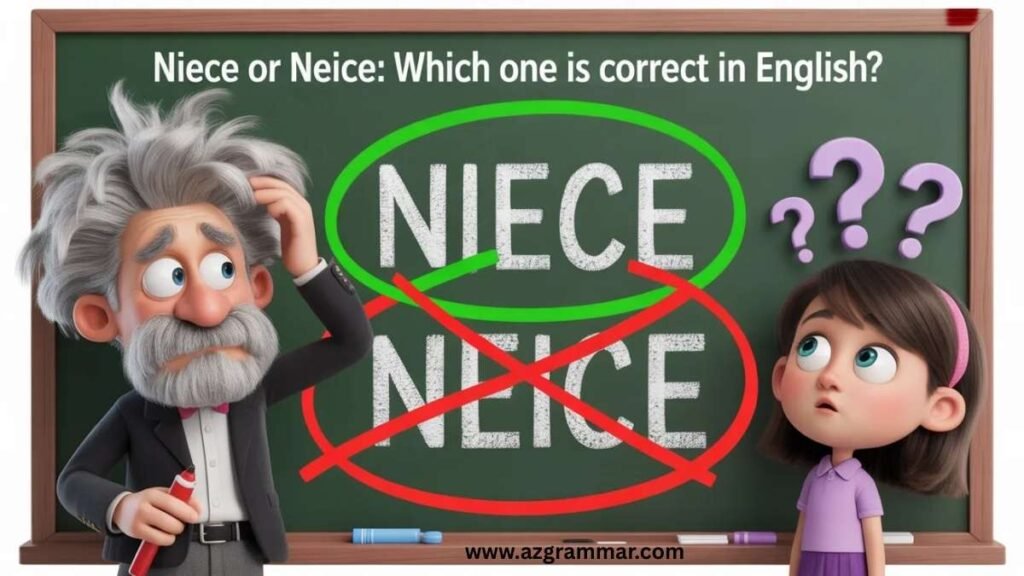
English spelling can be surprisingly tricky. Some words look simple yet cause confusion for millions of writers every year. One common example is “Niece or Neice.” Many people pause when typing this word because both spellings look plausible.
However, only one spelling is correct.
This guide explains the difference between niece and neice, the spelling rule behind the word, pronunciation, examples, grammar usage, and practical memory tricks. By the end, you will understand exactly why “niece” is correct and why “neice” is wrong.
Along the way, you’ll also learn about English spelling rules, pronunciation patterns, and common mistakes that cause this confusion.
Niece or Neice — Quick Answer
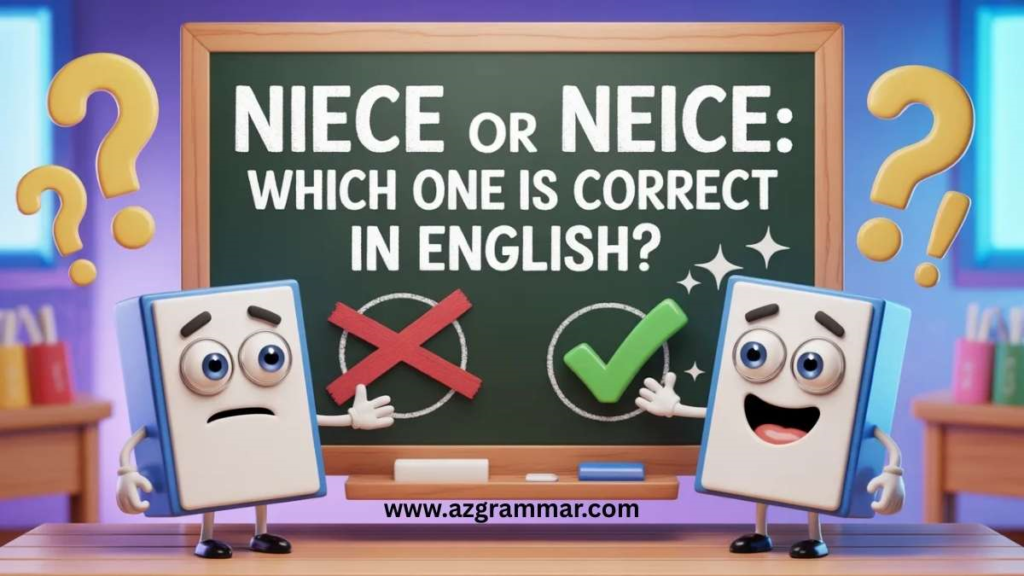
If you only need a quick answer, here it is:
- Niece is the correct spelling.
- Neice is a spelling mistake.
The correct word uses the “ie” letter order, not “ei.”
Example Table
| Word | Correct or Incorrect | Meaning |
|---|---|---|
| Niece | Correct | Daughter of your sibling |
| Neice | Incorrect | Misspelling of niece |
Quick Example Sentences
Correct:
- My niece is visiting this weekend.
- I bought a birthday gift for my niece.
Incorrect:
- My neice is visiting this weekend.
- I bought a birthday gift for my neice.
If you want to write correctly in academic writing, professional emails, or blogs, always use niece.
Career or Carrer: The Correct Spelling Finally Explained
What Does “Niece” Mean?
Before discussing spelling rules, it helps to understand the meaning.
A niece is a family relationship term used in English.
Definition
A niece is the daughter of your brother or sister.
This word functions as a noun in English grammar.
Example Sentences
- My niece just started college this year.
- We bought a birthday present for our niece.
- Her niece loves painting and photography.
- Their niece won a science competition.
Family Relationship Example
Here is a simple relationship diagram.
| Person | Relationship |
|---|---|
| Brother | Parent |
| Sister | Parent |
| Their daughter | Your niece |
Similarly:
| Person | Relationship |
|---|---|
| Your sibling’s son | Nephew |
These family words are part of everyday English vocabulary.
How to Pronounce “Niece”
Another reason people confuse niece or neice is pronunciation.
The word niece is pronounced:
/niːs/
Which sounds like “nees.”
Pronunciation Comparison
| Word | Pronunciation |
|---|---|
| Niece | /nees/ |
| Peace | /pees/ |
| Piece | /pees/ |
Notice something interesting.
Although peace, piece, and niece are spelled differently, they sound very similar.
This phenomenon is common in English because many words come from different historical languages. That explains why spelling does not always match pronunciation.
Why “Neice” Is Incorrect
You might see neice written online. However, this spelling is not recognized in standard English dictionaries.
Major dictionaries such as:
- Oxford English Dictionary
- Merriam-Webster
- Cambridge Dictionary
All confirm that “niece” is the correct spelling.
Examples of Incorrect Usage
❌ My neice is visiting today.
❌ I bought a gift for my neice.
Correct Usage
✔ My niece is visiting today.
✔ I bought a gift for my niece.
Why Spelling Mistakes Spread
Spelling errors like neice often spread through:
- social media posts
- text messages
- informal online writing
- autocorrect mistakes
Because these mistakes appear frequently, many people start assuming the spelling might be correct.
However, in formal writing, academic work, and professional communication, using the correct spelling matters.
The Spelling Rule Behind “Niece”
The spelling of niece follows a well-known guideline in English spelling.
The “I Before E” Rule
The traditional rule says:
“I before E except after C.”
This rule means that the letters i and e usually appear in this order: ie.
Words That Follow the Rule
| Word | Pattern |
|---|---|
| Niece | ie |
| Believe | ie |
| Piece | ie |
| Field | ie |
| Chief | ie |
However, English has many exceptions.
Shakey or Shaky: Clear Meaning with Easy Examples
For example:
| Word | Exception |
|---|---|
| Receive | ei |
| Ceiling | ei |
| Weird | ei |
Even though exceptions exist, niece follows the standard ie spelling pattern.
The Origin and Etymology of “Niece”
The word niece has an interesting history.
English vocabulary developed through centuries of linguistic borrowing from different languages.
Historical Origin
The word niece comes from:
- Old French: niece
- Latin: neptis
The Latin word neptis meant:
- granddaughter
- female descendant
Over time, the meaning evolved in French and later entered English during the Middle Ages.
Timeline of the Word
| Period | Development |
|---|---|
| Latin era | neptis used for female descendants |
| Old French | niece adopted as a family term |
| Middle English | spelling standardized as niece |
| Modern English | niece used globally |
This linguistic journey explains why the spelling might seem unusual today.
Niece vs Neice — Side-by-Side Comparison
To eliminate confusion completely, compare both spellings clearly.
| Feature | Niece | Neice |
|---|---|---|
| Correct spelling | Yes | No |
| Part of speech | Noun | Not recognized |
| Meaning | Daughter of a sibling | None |
| Usage | Standard English | Spelling mistake |
Key Fact
Neice is simply a misspelling of niece.
Common Spelling Mistakes Similar to “Neice”
The confusion between ie and ei causes many spelling mistakes in English.
Here are some examples.
| Correct Word | Common Misspelling |
|---|---|
| Niece | Neice |
| Receive | Recieve |
| Believe | Beleive |
| Friend | Freind |
Why These Errors Happen
Several factors explain these mistakes:
- English spelling evolved from multiple languages
- Some words follow different patterns
- People often spell words based on pronunciation
As a result, English learners often struggle with these patterns.
How to Remember the Correct Spelling of Niece
Fortunately, there are simple memory tricks that make this easy.
Simple Memory Trick
Think of this phrase:
“My niece is part of my family ties.”
Notice that niece and ties both contain IE.
Visual Pattern Trick
Break the word into parts.
N + IE + CE
Once you focus on the IE pattern, remembering the spelling becomes easier.
Another Quick Trick
Think of this sentence:
“I see my niece.”
The phrase “I see” reminds you of the IE spelling.
Real-World Examples of “Niece” in Sentences
Using examples helps reinforce the correct spelling.
Family Context
- My niece loves playing the piano.
- We visited our niece during the holidays.
- Their niece just graduated from high school.
Everyday Conversation
- I’m taking my niece to the zoo.
- Her niece enjoys reading mystery novels.
Writing and Communication
- Please bring your niece to the family reunion.
- My niece sent me a thank-you letter.
Professional Context
Even in formal writing, the word appears frequently:
- Legal documents describing family members
- Medical records describing relatives
- Genealogy research
Plural Form of Niece
Like most English nouns, niece has a plural form.
Singular and Plural
| Form | Word |
|---|---|
| Singular | niece |
| Plural | nieces |
Example Sentences
- My nieces are visiting this weekend.
- She has three nieces and two nephews.
- Their nieces enjoy playing soccer together.
Training vs Trainning: Grammar and Usage
Grammar Rule
Most English nouns form plurals by adding -s or -es.
For example:
| Singular | Plural |
|---|---|
| niece | nieces |
| niece | nieces |
| cousin | cousins |
| sister | sisters |
British vs American English: Is There Any Difference?
Many English words have different spellings depending on the region.
Examples include:
| American | British |
|---|---|
| color | colour |
| center | centre |
| theater | theatre |
However, niece does not change between dialects.
Regional Comparison
| Region | Spelling |
|---|---|
| American English | niece |
| British English | niece |
| Canadian English | niece |
| Australian English | niece |
This word has no regional spelling variation.
Why English Learners Often Confuse Niece and Neice
Students learning English as a second language frequently struggle with spelling patterns.
Common Challenges
- confusing vowel combinations
- pronunciation that does not match spelling
- spelling words based on sound
- unfamiliar grammar patterns
Linguistic Explanation
English spelling is part of orthography, the system used to represent language in written form.
Because English borrowed vocabulary from:
- Latin
- French
- Germanic languages
many spelling patterns developed over centuries.
This complexity explains why words like niece can appear confusing at first.
Words Related to Niece
Understanding related vocabulary helps strengthen language learning.
Family Relationship Words
| Word | Meaning |
|---|---|
| Nephew | Son of your sibling |
| Aunt | Sister of your parent |
| Uncle | Brother of your parent |
| Cousin | Child of your aunt or uncle |
| Sibling | Brother or sister |
Example Sentence
- My niece and nephew visited during the summer.
- My aunt brought my cousin to the party.
These terms form the core vocabulary of family relationships in English.
Party’s or Parties: Which Spelling Is Correct?
Quick Grammar Summary
Here are the key facts to remember.
- Niece is the correct spelling
- Neice is incorrect
- The word refers to a sibling’s daughter
- It follows the ie spelling pattern
- The plural form is nieces
If you remember one rule, remember this:
Always write “niece,” never “neice.”
Reference Cambridge Dictionary Definitions
Here’s a trusted source for clear Grammar:
FAQs
Is it niece or neice?
The correct spelling is niece. The spelling neice is a common mistake and is not recognized in standard English dictionaries.
What does the word niece mean?
A niece is the daughter of your brother or sister. The term describes a family relationship and is commonly used when talking about relatives.
Why is niece spelled with “ie”?
The word niece follows the common English spelling guideline “I before E except after C.” Because the letter C does not come before it, the correct pattern is IE.
Is neice ever correct in English?
No. Neice is always considered incorrect spelling. In formal writing, academic work, and professional communication, you should always use niece.
What is the plural of niece?
The plural form of niece is nieces. For example: She has two nieces and one nephew.
How do you pronounce niece?
The word niece is pronounced /niːs/, which sounds like “nees.”
Why do people confuse niece and neice?
Many people confuse the two spellings because of the ie vs ei pattern found in English words. Since both combinations appear in different words, writers sometimes reverse the letters by mistake.
Are there other words similar to niece that confuse people?
Yes. Several English words cause similar confusion, including:
- Receive vs Recieve
- Believe vs Beleive
- Friend vs Freind
- Piece vs Peice
These mistakes happen because English spelling patterns can be inconsistent.
Conclusion:
The confusion between “niece or neice” is extremely common, yet the answer is simple once you understand the spelling rule.
The correct spelling is niece, which refers to the daughter of your brother or sister. The spelling neice is a mistake and does not exist in standard English dictionaries or formal writing.
This confusion usually happens because of the ie vs ei pattern found in many English words. However, niece follows the traditional “i before e” spelling rule, which makes it easier to remember once you recognize the pattern.
Here are the key points to remember:
- Niece is the correct spelling.
- Neice is always incorrect.
- The word is pronounced /nees/.
- The plural form is nieces.
- It refers to a family relationship noun.
When writing emails, blog posts, academic papers, or everyday messages, using the correct spelling helps maintain clarity, professionalism, and credibility.
A simple memory trick can help you avoid this mistake forever:
“My niece is part of my family ties.”
Both niece and ties contain the IE pattern, which reminds you of the correct spelling.
English spelling can sometimes feel complicated. However, once you learn the patterns and rules behind words like niece, writing correctly becomes much easier.

James Walker is an English language educator and grammar enthusiast dedicated to helping learners improve their writing and communication skills. As an author at AZ Grammar, he simplifies complex grammar rules into clear, practical lessons suitable for students and beginners. With a passion for language learning and education, James focuses on making English grammar easy, understandable, and useful for everyday communication and academic success worldwide.
Email: azgrammar29@gmail.com
Website: azgrammar.com