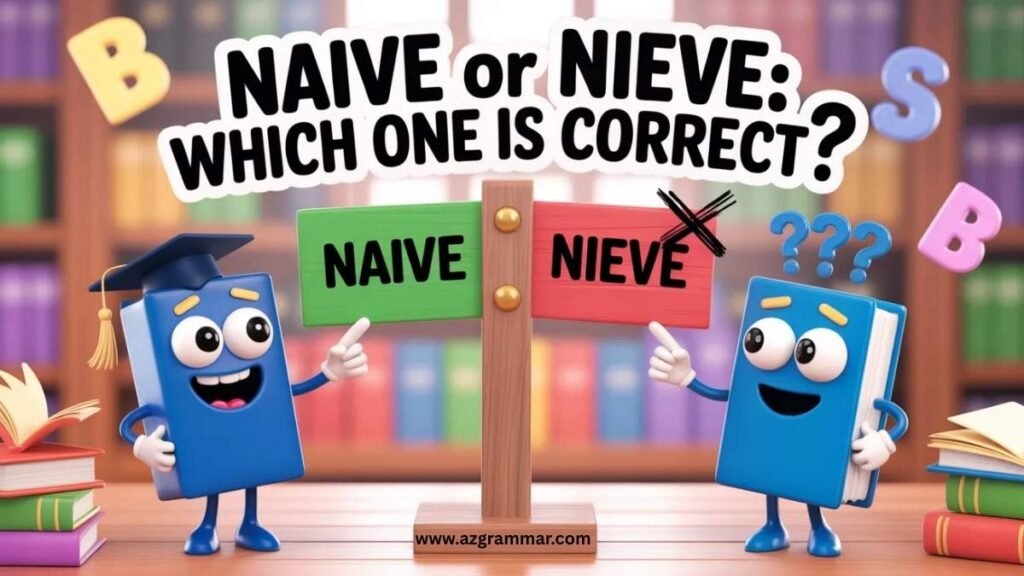
You’re halfway through an email. Everything sounds smart and polished. Then you hit that word. Is it Naive or Nieve: Which One Is Correct? Suddenly your confidence evaporates. The red underline appears. Your brain whispers, “I before E… right?” English smirks and refuses to cooperate. Don’t worry. This spelling trap catches more people than you think. It looks simple, yet it sparks doubt every single time. In this article, we’ll settle the debate clearly and quickly. You’ll learn the correct spelling, the meaning, the pronunciation, and why this tiny mix-up happens so often. After this, you’ll type it without hesitation.
Quick Answer: Naive Is Correct
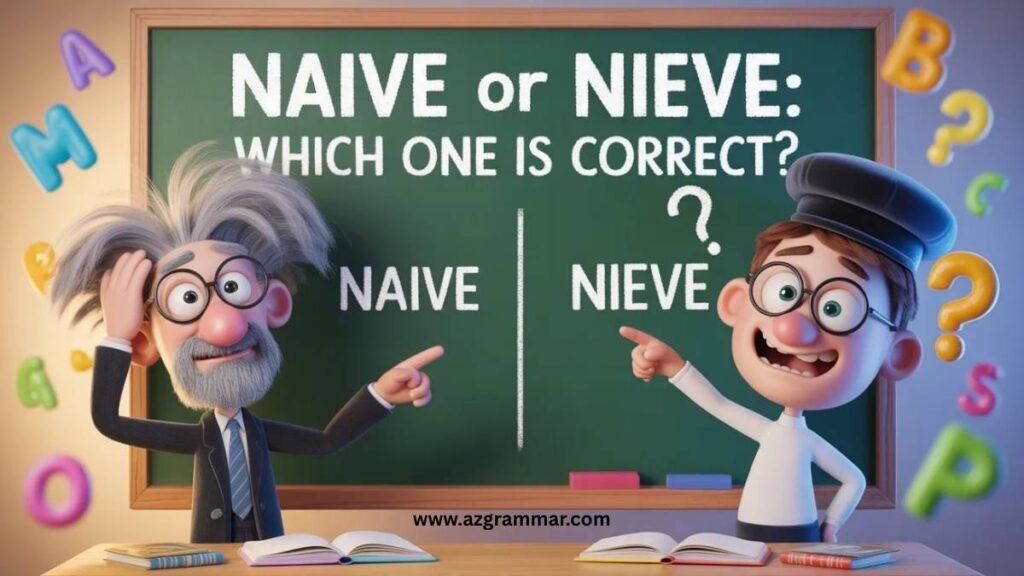
Here’s the direct answer:
The correct spelling in English is naive. “Nieve” is not an English word. It is the Spanish word for “snow.”
That’s it. No ambiguity.
Here’s a simple comparison:
| Word | Correct in English? | Meaning |
|---|---|---|
| Naive | Yes | Lacking experience, judgment, or worldly knowledge |
| Nieve | No | Spanish word meaning “snow” |
Signer or Signor What’s the Real Difference?
If you’re writing in English and describing a person, use naive.
Now let’s dig deeper so you understand why this confusion keeps happening.
Why People Confuse “Naive” and “Nieve”
Spelling mistakes rarely happen without logic. Your brain usually follows a pattern. In this case, several patterns collide.
The “I Before E” Rule Trap
You probably learned:
“I before E except after C.”
However, English loves exceptions.
The word naive breaks your internal rhythm. Your brain wants to flip the vowels.
So you type “nieve.”
It looks right. It feels balanced. But it isn’t correct in English.
Phonetic Spelling Habits
Many people spell words how they sound.
Naive is pronounced:
nuh-EEV
When you hear “eev,” your brain might assume “ie.” That’s how we spell “piece” and “field.”
However, English doesn’t always reward logic.
Influence from the Spanish Language
Here’s the twist.
In Spanish, “nieve” means snow.
So if someone speaks Spanish or sees Spanish words frequently, their brain may default to that spelling.
This cross-language interference explains a huge percentage of searches for “naive or nieve.”
The Diaeresis Mark (ï)
The original French spelling is:
naïve
Those two dots over the “ï” are called a diaeresis.
They signal that the “a” and “i” are pronounced separately.
Without the dots, English readers still pronounce it correctly. However, the accent adds visual complexity. That complexity increases uncertainty.
Keyboard Limitations
Most English keyboards don’t make it easy to type “ï.”
So people drop the accent and write “naive.”
That’s completely acceptable in modern American English.
But the visual variation adds to the confusion.
Momment or Moment Which One Is Correct?
What Does “Naive” Mean in English?
Now that the spelling is clear, let’s talk meaning.
According to:
- Merriam-Webster
- Oxford English Dictionary
- Cambridge Dictionary
The word naive means:
- Lacking experience
- Showing poor judgment
- Too trusting
- Having innocent simplicity
In plain English, a naive person doesn’t fully understand how the world works yet.
Tone Matters
The word can shift in tone depending on context.
Neutral Example
“She made a naive mistake.”
This suggests inexperience.
Mildly Negative Example
“He was naive to believe that offer.”
This implies poor judgment.
Positive Example
“The painting has a naive charm.”
In art, naive can mean simple, pure, or untrained in a good way.
Language isn’t rigid. Context shapes meaning.
How to Pronounce Naive Correctly
Here’s the breakdown:
- Pronunciation: nuh-EEV
- Syllables: Two
- Stress: On the second syllable
Say it slowly:
nuh — EEV
The diaeresis in naïve signals that the “a” and “i” should not blend into a single sound.
However, modern American English usually drops the accent and keeps the pronunciation.
Both spellings are accepted:
- naive
- naïve
In everyday writing, you can safely use naive.
Word Origin: Where “Naive” Comes From
Understanding origin makes spelling easier.
The word comes from French:
naïve
That French word traces back to Latin roots meaning:
- Natural
- Innate
- Inborn
Originally, it described something untouched or pure.
Over time, English adopted the word and simplified its spelling by often removing the accent mark.
This historical shift explains why both naive and naïve appear today.
Language evolves. Spelling adapts.
What About “Nieve”?
Let’s be clear.
- “Nieve” means snow in Spanish.
- It does not describe personality.
- It is not an English synonym for inexperienced.
Example in Spanish:
“La nieve cubre las montañas.”
Translation: “The snow covers the mountains.”
If you write:
“She is nieve.”
You are not describing her personality. You are accidentally calling her snow.
That’s not the message most people intend.
Real World Examples of Naive in Context
Understanding usage prevents mistakes.
Everyday Conversation
- “I was naive to trust that email.”
- “She seemed naive about the risks.”
- “He had a naive belief that everything would fix itself.”
These examples show inexperience, not stupidity.
Professional Writing
In business communication, tone becomes important.
Case Study: Corporate Email
Imagine a manager writes:
“That assumption was naive.”
This could:
- Signal lack of market awareness
- Suggest incomplete research
- Highlight strategic oversight
However, it could also feel dismissive.
Professional writers often soften the tone:
- “That assumption may be overly optimistic.”
- “That approach seems based on limited data.”
Sometimes clarity requires tact.
Spicey or Spicy What’s the Correct Spelling?
Journalism and Analysis
Writers often use naive to critique ideas:
“The proposal reflects a naive understanding of economic policy.”
In this context, the word questions expertise rather than intelligence.
Creative and Artistic Context
In art history, naive art describes work created by artists without formal training.
Characteristics include:
- Simple perspective
- Bright colors
- Childlike composition
- Emotional directness
Here, naive is not an insult. It signals authenticity.
Naive vs Innocent vs Gullible
Many people search for “naive vs innocent” or “naive vs gullible.”
The differences matter.
| Word | Core Meaning | Emotional Tone |
|---|---|---|
| Naive | Lacking experience | Neutral to mild negative |
| Innocent | Free from guilt or wrongdoing | Positive |
| Gullible | Easily deceived | Strongly negative |
Naive
“She was naive about investing.”
Implies inexperience.
Innocent
“He was innocent of the charges.”
Implies moral purity.
Gullible
“He’s gullible enough to believe anything.”
Implies weakness or foolishness.
Subtle shifts in word choice change perception dramatically.
Common Spelling Mistakes to Avoid
Here are frequent incorrect versions:
- nieve
- naieve
- neive
- naïeve
Why do they appear?
- Reversed vowels
- Phonetic guesswork
- Overcorrection
- Accent confusion
Here’s a simple memory trick:
Think: “Naive has ‘ai’ like ‘air.’ You need air to breathe. Keep the A before I.”
Short. Sticky. Effective.
Is “Naïve” Better Than “Naive”?
Both spellings are correct.
However, usage varies:
- American English often drops the accent.
- British English keeps “naïve” more frequently.
- Academic writing sometimes preserves the original accent.
If you’re writing casually or professionally in the United States, naive is completely acceptable.
Clarity matters more than decorative accents.
Is Naive an Insult?
This question comes up often.
The answer depends on tone.
Neutral:
“That was a naive assumption.”
This critiques the idea.
Harsh:
“You’re naive.”
This critiques the person.
Delivery changes everything.
When spoken gently, it suggests inexperience.
When spoken sharply, it feels dismissive.
Words carry weight. Context decides impact.
Unphased or Unfazed Which One Is Correct?
Search Behavior and Why This Question Is So Common
Search engines show consistent patterns around spelling confusion.
Why?
- High reliance on phonetic spelling
- Cross language exposure
- Autocorrect highlighting errors
- Uncertainty around accent marks
People don’t want embarrassment in professional emails.
They don’t want red underlines in reports.
So they search.
Spelling questions often carry anxiety.
Clear answers reduce friction
Reference Cambridge Dictionary Definitions
Here’s a trusted source for clear Grammar:
FAQs Naive or Nieve
What is a naive person?
A naive person is someone who lacks experience or practical knowledge in a particular situation. They may trust others too easily or believe things without questioning them. However, being naive does not mean someone is unintelligent. It usually means they have not yet encountered certain realities of life. For example, a new employee who believes every workplace promise might seem naive simply because they have not faced corporate politics before.
How does naive mean?
The word naive means lacking experience, judgment, or worldly understanding. It can describe someone who approaches situations with innocence or unrealistic optimism. In some contexts, it suggests simplicity or purity rather than foolishness. For example, saying “That was a naive assumption” implies the idea lacked practical insight, not intelligence.
What does nieve mean?
Nieve is a Spanish word that means snow. It does not describe a personality trait in English. If you use “nieve” to describe someone in English writing, it is a spelling mistake. In Spanish, you might say, “La nieve es blanca,” which means “The snow is white.”
How do you spell nieve or naive?
The correct spelling in English is naive. “Nieve” is not correct in English when describing someone inexperienced. If you are writing about a person who lacks experience or judgment, always use naive.
Is nieve a real word?
Yes, but only in Spanish. Nieve means snow in the Spanish language. It is not a correct English word for describing a person. So while it is technically a real word, it does not belong in English sentences about personality.
Why are there two dots on naive?
The two dots over the “ï” in naïve are called a diaeresis. They show that the vowels “a” and “i” are pronounced separately. Instead of blending into one sound, they create two syllables: nuh-EEV. In modern American English, the accent is often dropped, and “naive” is perfectly acceptable.
How do Americans say naive?
Americans pronounce naive as:
nuh-EEV
It has two syllables, with stress on the second syllable. The pronunciation stays the same whether you spell it “naive” or “naïve.”
Is it spelt naive or naive?
The correct spelling is naive. You may also see naïve with the accent mark. Both are correct in English. However, “nieve” is incorrect when writing in English about someone inexperienced.
What does it mean if you’re nieve?
If someone writes “you’re nieve,” they likely meant “you’re naive.” Being naive means you may lack experience or be too trusting in a situation. The spelling “nieve” itself does not describe personality in English. It is simply the Spanish word for snow.
Conclusion:
Spelling confusion Naive or Nieve happens to everyone. English has layers, borrowed words, and exceptions that don’t always follow neat rules. However, this one is simple once you see it clearly.
The correct spelling in English is naive.
“Nieve” is a Spanish word that means snow.
When you describe someone as naive, you’re saying they lack experience or worldly judgment. Depending on tone, that description can feel neutral, mildly critical, or even positive in artistic contexts. Meanwhile, using “nieve” in English writing is simply a spelling mistake.
Here’s what you should remember:
- Naive = correct in English
- Nieve = Spanish word for snow
- Pronounced nuh-EEV
- “Naïve” with the accent is also correct
- Context determines whether the tone feels harsh or gentle
The next time your cursor blinks and you pause over the spelling, you won’t second-guess yourself.
You’ll type naive confidently.
And move on.

James Walker is an English language educator and grammar enthusiast dedicated to helping learners improve their writing and communication skills. As an author at AZ Grammar, he simplifies complex grammar rules into clear, practical lessons suitable for students and beginners. With a passion for language learning and education, James focuses on making English grammar easy, understandable, and useful for everyday communication and academic success worldwide.