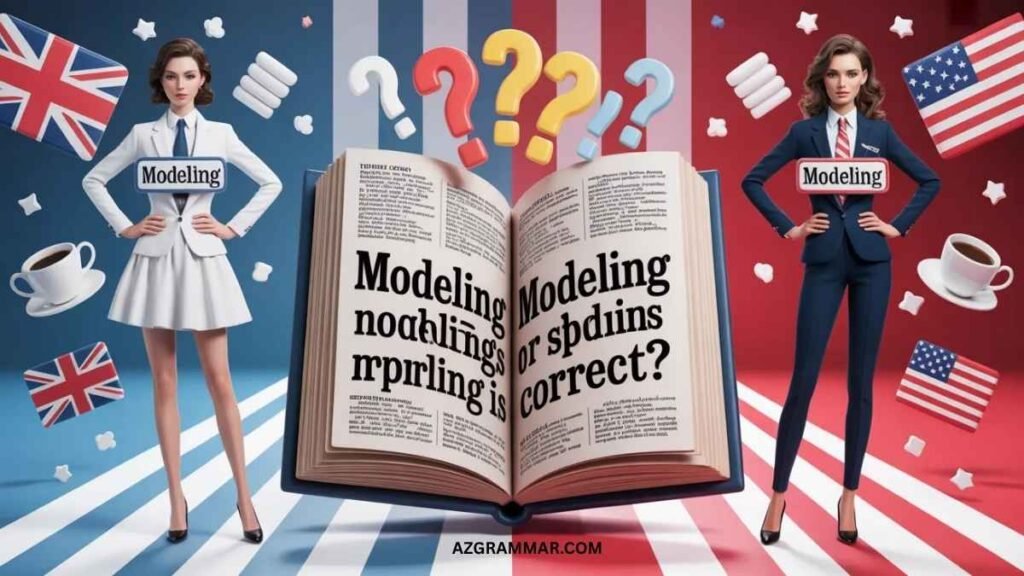
Ever stared at modelling or modeling long enough that both start to look wrong? You’re not alone. It’s one of those sneaky spelling dilemmas that can make even confident writers pause mid-sentence and think, “Wait… which one is actually correct?”
Here’s the twist. You might expect a strict right-or-wrong answer. However, English has other plans. The difference between modelling or modeling isn’t about correctness. It’s about location, style, and knowing your audience.
Think of it like ordering fries versus chips. Same thing, different names depending on where you are. Once you understand the rule, the confusion disappears. Let’s break it down so you can choose the right spelling every time without second-guessing yourself.
Modelling vs Modeling — Quick Answer
Modelling vs Modeling:
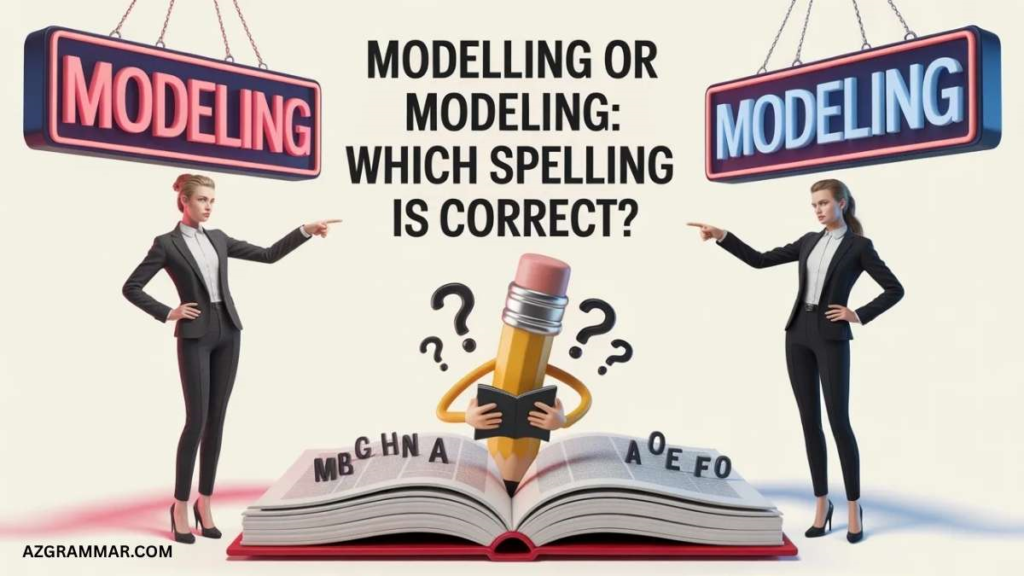
Both forms are correct. “Modeling” is the standard spelling in American English, while “modelling” is used in British English and most Commonwealth countries.
There is no difference in meaning. The variation is purely regional.
Useing or Using: The Correct Spelling Explained Clearly
What Does “Modeling / Modelling” Mean?
The word comes from the verb “model.” In English grammar, adding “-ing” creates a present participle. This form describes an ongoing action.
Depending on context, modeling/modelling can mean:
- Creating a representation, such as a design or simulation
- Demonstrating behavior for others to follow
- Working in fashion or media
Examples
- She is modeling a new collection for the brand.
- The teacher is modelling correct pronunciation for students.
- Engineers are modeling structural changes before construction.
The meaning remains consistent across both spellings.
Understanding the Base Word and Structure
To use the correct form confidently, start with the base verb:
- Base form → model
- Present participle → modeling / modelling
This change is part of standard verb inflection in English grammar.
For example:
- plan → planning
- run → running
- model → modeling / modelling
The variation occurs during spelling transformation, not meaning.
Why Do the Spellings Differ?
The difference follows established spelling conventions in English. It is not arbitrary.
The Double “L” Rule
In British English, verbs ending in “l” often double the final consonant before adding -ing.
- model → modelling
In American English, the final “l” is typically not doubled:
- model → modeling
Why This Rule Exists
British English preserves traditional spelling patterns. American English adopted simplified forms during standardization.
These conventions are documented in authoritative references such as the Oxford English Dictionary and Merriam-Webster Dictionary.
If you follow either system consistently, your usage will be considered correct.
Recognizing the Pattern Across English
This is part of a broader spelling pattern. Once you understand it, you can apply it confidently.
Common Examples
- travelling vs traveling
- cancelling vs canceling
- labelled vs labeled
This consistency across words reinforces that modelling vs modeling is not an exception. It follows a predictable rule.
Quick Reference Comparison
| Feature | Modelling | Modeling |
|---|---|---|
| Language Standard | British English | American English |
| Spelling Rule | Double “L” | Single “L” |
| Geographic Use | UK, Australia, Canada | United States |
| Meaning | Identical | Identical |
Use this as a quick reference when editing or proofreading.
CC’ed or CC’d: Which One Is Right for Professional Emails?
Which Spelling Should You Use?
The correct choice depends entirely on your audience and writing context.
For American English
Use modeling.
This is the standard form in:
- US-based publications
- American academic writing
- Business and digital content targeting US readers
For British English and Commonwealth Usage
Use modelling.
This applies to:
- UK publications
- Australian and Canadian contexts
- Academic writing following British conventions
For International Content
Select one standard and apply it consistently.
Editorial Best Practice: Choose a style guide at the start of your project and follow it throughout. Consistency is a core requirement in professional writing.
Does Spelling Affect SEO?
Spelling can influence SEO performance, but only in specific ways.
Search engines recognize both forms as equivalent in meaning. However, user search behavior varies by region.
What the Data Shows
- “Modeling” has higher search volume globally
- “Modelling” is more common in UK-based searches
Practical SEO Guidance
- Use the dominant spelling for your target audience
- Include the alternative form naturally within the content
- Avoid overusing both versions in a way that disrupts readability
This approach aligns with how search engines interpret language variations.
Authorized or Authorised: Stop Making This Common Mistake
Real-World Usage Guidelines
Academic Writing
Follow the required style guide:
- APA and MLA → typically American English
- Oxford style → British English
Institutions expect strict consistency.
Professional and Business Writing
Match the audience’s regional expectations. This improves clarity and credibility.
Digital Content and Blogging
Align spelling with your target market. This supports both user experience and SEO performance.
Everyday Communication
While informal writing may mix styles, consistent spelling still reflects stronger attention to detail.
Common Mistakes to Avoid
Even experienced writers make these errors.
Frequent Issues
- Mixing “modelling” and “modeling” in the same document
- Choosing a spelling that does not match the audience
- Overlooking consistency during editing
How to Prevent Them
- Define your language standard before writing
- Use editing tools or style guides for verification
- Perform a final consistency check before publishing
Consistency is a key marker of high-quality writing.
Why English Has Different Spelling Systems
English developed across regions with different standardization processes.
American English introduced simplified spelling conventions. British English retained traditional forms.
This explains differences such as:
- colour vs color
- centre vs center
- modelling vs modeling
Understanding this context helps you apply spelling rules more accurately across topics.
Quick Practice Check
Fill in the correct version based on audience:
- She is ___ a new product design.
- They are ___ effective communication skills.
If your audience is American, use modeling.
If your audience is British, use modelling.
This approach ensures accuracy in real usage.
Weird or Wierd? The Correct Spelling Explained
Related Concepts for Deeper Understanding
To strengthen your overall grammar skills, connect this topic with:
- American vs British spelling systems
- Consonant doubling rules
- Present participle formation
- Verb inflection patterns
- Writing consistency in professional contexts
These concepts form a strong foundation for accurate English usage.
Reference Cambridge Dictionary Definitions
Here’s a trusted source for clear Grammar:
FAQs
Is modeling spelled with one L or two?
Both are correct. “Modeling” uses one “L” in American English, while “modelling” uses two “L’s” in British English.
Which spelling is correct: modelling or modeling?
Both spellings are correct. The right choice depends on your audience. Use modeling for US readers and modelling for UK or Commonwealth readers.
What is the difference between modelling and modeling?
There is no difference in meaning. The only difference is spelling based on regional language standards.
Why does British English use “modelling”?
British English follows a rule that often doubles the final consonant when adding suffixes like -ing. That’s why model becomes modelling.
Is “modeling” correct in American English?
Yes, modeling is the standard and widely accepted spelling in American English.
Is “modelling” incorrect in the United States?
It is not technically wrong, but it is not standard in US writing. Most American readers expect modeling.
Which spelling is more common worldwide?
Modeling is more common globally due to the influence of American English, especially online.
Does spelling affect SEO rankings?
Not directly. Search engines understand both spellings. However, using the preferred spelling of your target audience can improve regional visibility.
Can I use both modelling and modeling in the same article?
No, you should avoid mixing them. Choose one spelling style and use it consistently throughout your content.
Which spelling should I use in academic writing?
Follow your required style guide. For example, APA usually uses American English, while Oxford style follows British English.
What is the rule for doubling consonants in English?
In British English, final consonants like “L” are often doubled before adding suffixes such as -ing. American English typically does not follow this rule.
Why are there spelling differences between American and British English?
These differences developed over time as American English simplified certain spellings while British English preserved traditional forms.
Do modelling and modeling have different meanings?
No, both words have exactly the same meaning. Only the spelling differs.
How can I stay consistent with spelling in my writing?
Decide your target audience before writing. Then choose either American or British spelling and stick to it throughout your content.
Final Thoughts
Choosing between modelling and modeling doesn’t have to be confusing. The rule is straightforward once you focus on your audience.
If you’re writing for US readers, use modeling. If your audience is in the UK or similar regions, go with modelling. The meaning stays the same, so your decision is about clarity and consistency, not correctness.
What matters most is this: pick one style and stick with it throughout your content. That consistency builds trust, improves readability, and gives your writing a more professional feel.
When you apply this approach, you won’t hesitate over this spelling again.

James Walker is an English language educator and grammar enthusiast dedicated to helping learners improve their writing and communication skills. As an author at AZ Grammar, he simplifies complex grammar rules into clear, practical lessons suitable for students and beginners. With a passion for language learning and education, James focuses on making English grammar easy, understandable, and useful for everyday communication and academic success worldwide.
Email: azgrammar29@gmail.com
Website: azgrammar.com