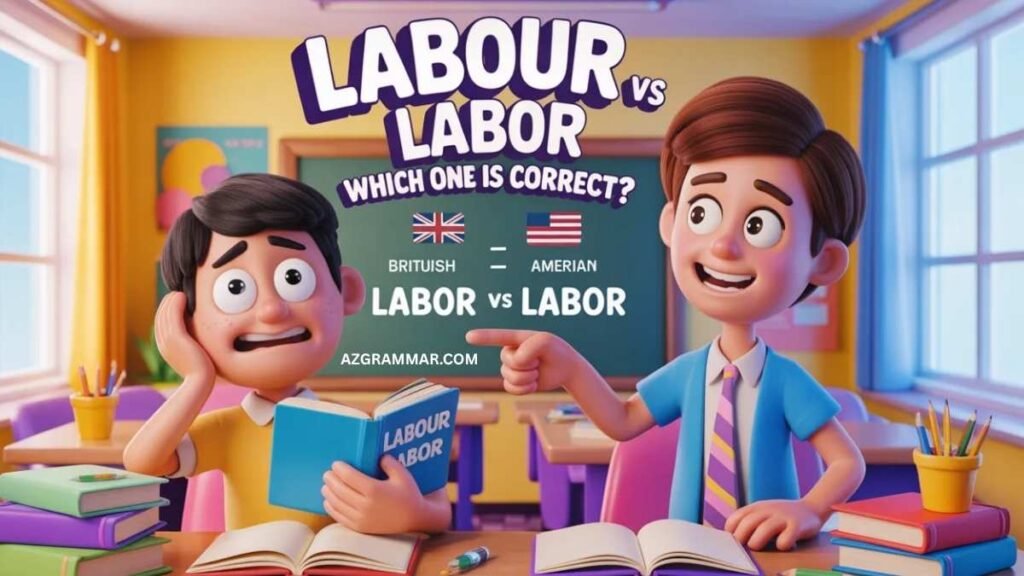
You’re typing along, feeling productive, maybe even a little proud then suddenly your brain hits a speed bump: labour vs labor. One tiny letter. One unexpected identity crisis. Do you keep the “u” or drop it like Americans dropped tea into Boston Harbor? It sounds dramatic, but this small spelling choice can quietly signal whether you know your audience or not. And yes, people do notice. The good news? You don’t need to memorize complicated grammar rules to get it right. Once you understand the logic behind labor or labour, everything clicks. Let’s break it down so you can write confidently without second-guessing every sentence again.
Quick Answer: Labour vs Labor
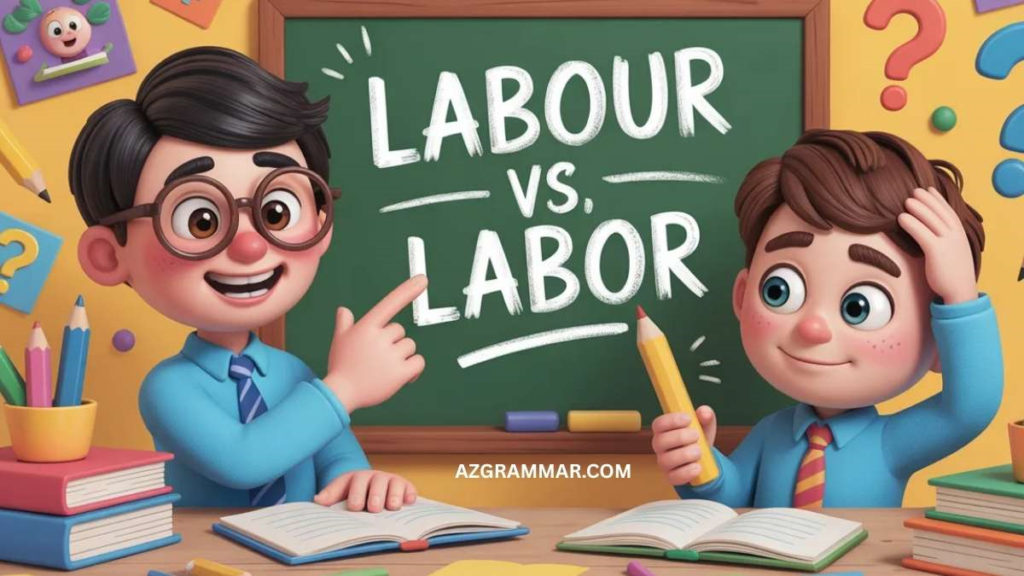
Let’s settle it immediately.
- Labor → Used in American English (US)
- Labour → Used in British English (UK), Canada, Australia
Both words mean the same thing. The difference is regional spelling only.
If you’re asking “is it labour or labor?”, the answer depends entirely on who you’re writing for.
Company’s or Companies: What’s the Correct Spelling?
Featured Snippet Answer (Fast Clarity)
- Labor (US spelling)
- Labour (UK spelling)
- Both mean the same thing
- Difference is regional only
What Does Labour / Labor Mean? (Simple Definition)
Let’s break down the labour meaning and labor meaning in simple terms.
Core definition:
Labour (or labor) refers to work, effort, or physical and mental activity used to produce something.
However, this word has multiple meanings depending on context.
Main meanings of labour / labor
Work and effort
- Physical or mental work
- Example: “Manual labor requires strength and endurance.”
Economic term
- Refers to the workforce
- Example: “The labor market is expanding.”
Childbirth
- The process of giving birth
- Example: “She went into labor last night.”
Key insight
The meaning stays the same across regions. Only the spelling changes.
Labour vs Labor Difference Explained Clearly
This is where most confusion disappears.
| Feature | Labour | Labor |
|---|---|---|
| Region | UK, Canada, Australia | United States |
| Meaning | Same | Same |
| Usage | Standard | Standard |
| Spelling style | British English | American English |
Important takeaway
The difference between labour and labor is not about meaning. It’s about where your audience is located.
Origin of Labour and Labor
Understanding the history makes everything easier to remember.
Language roots:
- Origin: Latin word “labor”
- Passed through Old French
- Entered Middle English as labour
Stuffie or Stuffy: Exact Meaning and Spelling (2026 Guide)
Why the spelling changed in the US
In the early 1800s, Noah Webster, an American lexicographer, simplified many English spellings.
Examples of his changes:
| British | American |
|---|---|
| Colour | Color |
| Honour | Honor |
| Labour | Labor |
Why this happened:
- Make spelling simpler
- Create a distinct American identity
- Standardize writing
Quote
“Language is the expression of ideas.” — Noah Webster
His reforms still shape modern English today.
British vs American English Spelling Patterns
This isn’t just about one word.
Common pattern:
- British English → uses “ou”
- American English → removes “u”
Examples:
- Colour → Color
- Favourite → Favorite
- Honour → Honor
- Labour → Labor
Simple rule:
If you’re writing for a US audience, drop the “u.”
When to Use Labour vs Labor (Practical Guide)
This is where you make the right choice quickly.
Use “labor” if:
- Your audience is in the United States
- You’re following APA or MLA (US style guides)
- You’re writing for US-based companies
Use “labour” if:
- Your audience is in the UK, Canada, or Australia
- You’re writing academic or international content
- You’re following British English standards
Pro tip:
Always stay consistent. Mixing both spellings in one article weakens credibility.
Labour vs Labor in Different Contexts
This is where real understanding happens.
Work and Effort Context
- Manual labor (US)
- Manual labour (UK)
Used in industries like construction, agriculture, and manufacturing.
Economics Context
- Labor market
- Labor force participation
- Labor laws
Case insight:
In economics, labor represents one of the four key factors of production, along with land, capital, and entrepreneurship.
Childbirth Context
- US: “She went into labor.”
- UK: “She went into labour.”
Key takeaway
Same meaning. Different spelling based on location.
Labour vs Labor Grammar Rules
Let’s simplify the grammar side.
Part of speech:
- Mostly used as a noun
Examples of correct usage:
- “The labor force is growing.”
- “Skilled labour is in demand.”
Verb form (less common):
- “They labored for hours.” (US)
- “They laboured for hours.” (UK)
Whiny or Whiney: Which One Is Correct in English?
Related forms:
| Form | US | UK |
|---|---|---|
| Noun | Labor | Labour |
| Verb | Labored | Laboured |
| Adjective | Laborious | Labour-intensive |
Common Mistakes (And How to Avoid Them)
These errors are more common than you think.
Mixing spellings
❌ “The labour market in the US is strong for labor jobs.”
Fix:
✔ Stick to one version throughout your content.
Using wrong version for audience
- Writing for US readers but using labour
Ignoring style guides
- Academic writing requires consistency
Confusing related words
- Laborious vs labour-intensive
Labour vs Labor in Real-Life Examples
Correct (US English):
- “The labor market is improving.”
- “He works in manual labor.”
Correct (UK English):
- “The labour market is improving.”
- “He works in manual labour.”
Incorrect:
- Mixing both in the same document
Labour vs Labor Usage in Economics
This is where the word becomes more technical.
Definition in economics:
Labor refers to the human effort used in production.
Key facts:
- Labor is one of the four factors of production
- Includes both physical and mental work
- Measured through:
- Employment rates
- Productivity levels
Example:
A country with a skilled labor force tends to have stronger economic growth.
Why People Search “Labour vs Labor”
Understanding search intent helps you write better.
Common user questions:
- Which spelling is correct?
- Why do Americans drop the “u”?
- Can both be used interchangeably?
Reality:
People don’t just want spelling rules. They want context and confidence.
Keyword Strategy Insight (Ranking Advantage)
This outline is strong. It targets real intent, keeps things practical, and gives you clear ranking angles.
Now let’s build a keyword strategy that actually supports that structure and helps you outrank weaker content.
What works best:
- Answer questions early
- Use real-world examples
- Cover multiple contexts (work, economics, childbirth)
What most competitors miss:
- They only explain spelling
- They ignore usage scenarios
- They skip tone and audience targeting
Quick Memory Trick (Never Forget Again)
Make it simple.
- US = Shorter → Labor
- UK = Longer → Labour
Loses or Losses: Which One Is Correct in English
Easy association:
The “u” in labour stands for UK
Bottom line:
Use labor for US audiences. Use labour for UK and international audiences. Stay consistent, and your writing will always look professional.
Reference Cambridge Dictionary Definitions
Here’s a trusted source for clear Grammar:
FAQs
Is it labour or labor?
Both are correct. Use labor in American English and labour in British English, Canadian English, and other Commonwealth countries.
What is the difference between labour and labor?
There is no difference in meaning. The only difference is spelling based on region. Labor is American, while labour is British.
Is labour used in American English?
No. In American English, the correct spelling is labor. Using labour in US writing may look inconsistent or incorrect.
Why do Americans spell labour as labor?
Americans use labor because of spelling reforms by Noah Webster, who simplified many English words by removing extra letters like “u.”
Can you use labour and labor interchangeably?
Technically yes, but you should not mix them in the same document. Always stay consistent with one style based on your audience.
What does labour mean in economics?
In economics, labour (or labor) refers to the human effort used in production, including both physical and mental work.
How do you use labour or labor in a sentence?
- US: “The labor market is growing.”
- UK: “The labour market is growing.”
Which spelling should I use in professional writing?
Choose based on your audience. Use labor for US readers and labour for UK or international audiences. Consistency is key.
Is labour formal or informal?
Labour is a standard formal word in British English. The same applies to labor in American English.
What are common mistakes with labour vs labor?
The most common mistake is mixing both spellings in the same piece of writing, which makes your content look unprofessional.
Final Thought
It’s funny how one small letter can cause so much hesitation. Yet that’s exactly what happens with labour vs labor. The difference isn’t about meaning or correctness. It’s about knowing your audience and writing with intention.
Think of it like choosing the right accent for your message. You wouldn’t switch halfway through a conversation. The same rule applies here. Pick a style, stick with it, and your writing instantly feels more polished and professional.
Once you understand the logic, the confusion disappears. No more second-guessing. Just clear, confident writing exactly how it should be.

James Walker is an English language educator and grammar enthusiast dedicated to helping learners improve their writing and communication skills. As an author at AZ Grammar, he simplifies complex grammar rules into clear, practical lessons suitable for students and beginners. With a passion for language learning and education, James focuses on making English grammar easy, understandable, and useful for everyday communication and academic success worldwide.
Email: azgrammar29@gmail.com
Website: azgrammar.com