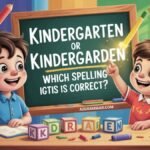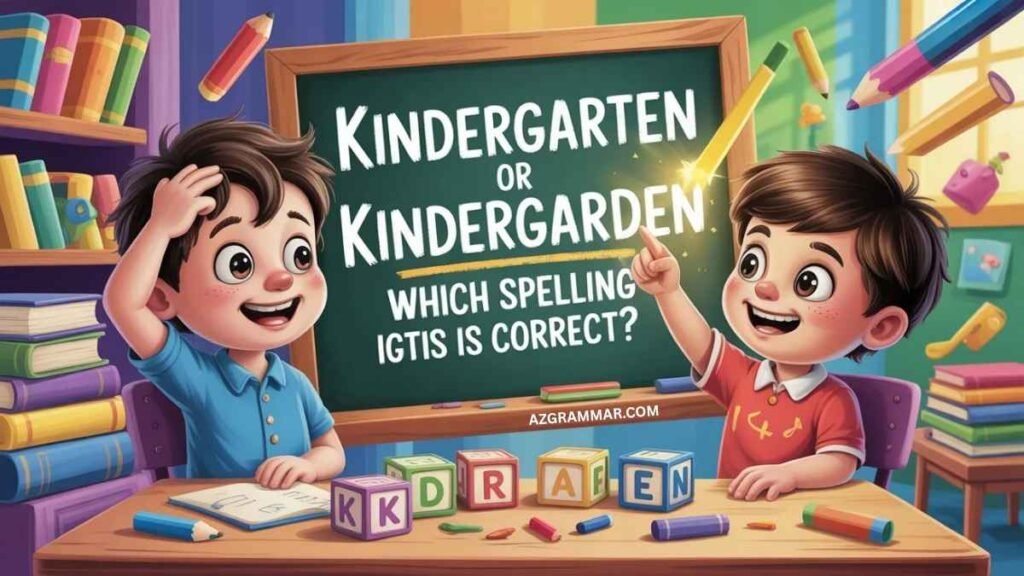
Ever typed “kindergarden” and felt completely confident… only for spellcheck to swoop in like a strict teacher with a red pen? Yep, English has a funny way of humbling us especially with words like kindergarten or kindergarden.
At first glance, kindergarden seems perfectly reasonable. I mean, it literally sounds like “children + garden,” right? Makes sense. Except… English decided to borrow the word from German and keep things just complicated enough to trip everyone up.
So if you’ve ever paused mid-sentence wondering, “Wait… is it kindergarten or kindergarden?” you’re in the right place. Let’s clear up the confusion (and save you from future spelling embarrassment) once and for all.
Kindergarten or Kindergarden – Quick Answer
- The correct spelling is “kindergarten,” not “kindergarden”
- The word comes from German, not standard English spelling rules
- Example: My child starts kindergarten this year.
👉 Simple takeaway:
Always write kindergarten, never kindergarden.
Modelling or Modeling: Which Spelling Is Correct?
What Does “Kindergarten” Mean?
Definition in Early Childhood Education
Kindergarten is:
- The first stage of formal education
- Designed for children aged 4 to 6 years
It focuses on:
- Basic literacy (reading and writing)
- Social skills
- Creative play
- Emotional development
Role in the Education System
Kindergarten sits between:
- Preschool / Nursery (before formal schooling)
- Primary school / Grade 1
Preschool vs Kindergarten
| Level | Age Range | Focus |
|---|---|---|
| Preschool | 3–4 years | Play-based learning |
| Kindergarten | 4–6 years | Structured learning |
| Primary School | 6+ years | Academic education |
Why Meaning Matters
Understanding the meaning helps you:
- Use the word correctly in context
- Avoid confusion in academic and professional writing
Why “Kindergarten” Is Correct (Spelling Explained)
Common Spelling Confusion
People often write:
- ❌ kindergarden
- ✅ kindergarten
Garten vs Garden
Here’s the key difference:
| Word Part | Meaning | Language |
|---|---|---|
| Garten | Garden | German |
| Garden | Garden | English |
👉 The correct word keeps the German spelling: “garten”
Phonetic Confusion in English
The confusion happens because:
- “garten” sounds similar to “garden”
- The “t” sound is soft, making people think it’s a “d”
Why “Kindergarden” Feels Right (But Isn’t)
- Familiar English word: garden
- Logical assumption: children + garden
- But English borrowed the word without changing spelling
📌 Important Fact:
English often keeps original spellings of borrowed words (like ballet, genre, kindergarten).
Monkeys or Monkies: Which Spelling Is Correct?
The Origin of the Word “Kindergarten”
German Roots
The word comes from:
- Kinder = children
- Garten = garden
👉 Literal meaning: “Children’s garden”
Who Created Kindergarten?
The concept was introduced by:
Friedrich Froebel (1782–1852)
German educator and founder of the kindergarten system
Historical Context
Froebel believed:
- Children learn best through play and creativity
- Education should feel like a garden where children grow
Why the Spelling Stayed the Same
When English adopted the word:
- It kept the original German spelling
- This preserved its cultural and educational meaning
Kindergarten vs Kindergarden – Key Differences
| Word | Correct? | Meaning | Usage |
|---|---|---|---|
| Kindergarten | ✅ Correct | Early education level | Standard English |
| Kindergarden | ❌ Incorrect | Misspelling | Avoid usage |
Key Insight
There is no situation where “kindergarden” is correct in standard English.
Why Do People Write “Kindergarden”? (Common Mistakes)
Influence of the Word “Garden”
- People recognize “garden” as a real English word
- They assume the spelling should match
Pronunciation Confusion
- “garten” sounds like “garden”
- Leads to incorrect spelling
Familiar Pattern Bias
- English favors familiar words
- “garden” feels more natural than “garten”
ESL Learner Challenges
English learners often:
- Apply logical spelling rules
- Replace unfamiliar patterns with familiar ones
Real Example
❌ She teaches kindergarden students.
✅ She teaches kindergarten students.
Vaccum or Vacuum: The Correct Spelling Explained
How to Spell Kindergarten Correctly (Memory Tricks)
Visual Breakdown
👉 kinder + garten
Association Trick
Think of it as:
👉 “Children’s garden” (German style, not English spelling)
Easy Memory Tips
- “Kinder” = children (like Kinder chocolate 🍫)
- “Garten” = keep it original, don’t change it
Quick Recall Rule
👉 If you see garden, it’s wrong
👉 If you see garten, it’s correct
How to Use “Kindergarten” in Sentences
Everyday Examples
- My daughter is starting kindergarten next month.
- Kindergarten helps children develop social skills.
Academic Context
- Kindergarten education plays a crucial role in early development.
- The curriculum includes reading, math, and creative activities.
Parenting Context
- We are choosing the best kindergarten for our child.
Formal vs Informal Usage
| Context | Example |
|---|---|
| Formal | Kindergarten programs improve early literacy rates. |
| Informal | My kid loves kindergarten! |
Kindergarten in Real-Life Context
Global Usage
Kindergarten is used worldwide, including:
- United States
- Canada
- Germany
- Australia
Differences in Education Systems
| Term | Meaning |
|---|---|
| Kindergarten | First formal school stage |
| Preschool | Pre-kindergarten preparation |
| Nursery School | Early childcare learning |
Cultural Perspective
In Germany:
- Focus is on play and development
In the US:
- More structured with academic readiness
Case Study: Finland Education System
Finland:
- Starts formal education later (age 7)
- Focuses on play-based early learning
- Still uses kindergarten-style concepts
📊 Result:
- Ranked among the top education systems globally
British vs American English Usage
Spelling Consistency
- ✅ Kindergarten (same in both US & UK)
- ❌ Kindergarden (incorrect everywhere)
Terminology Differences
| Country | Term Used |
|---|---|
| USA | Kindergarten |
| UK | Reception |
Key Insight
Even though terms differ:
- Spelling remains “kindergarten” globally
Calves or Calfs: Which Spelling Is Correct?
Related Grammar and Vocabulary Concepts
Common English Spelling Mistakes
- kindergarten ❌ kindergarden
- definitely ❌ definately
- separate ❌ seperate
Borrowed Words in English
English borrows many words:
- ballet (French)
- kindergarten (German)
- pizza (Italian)
Word Origin Matters
Understanding origin helps:
- Improve spelling accuracy
- Build vocabulary
Vocabulary Tip
Learning word roots makes spelling easier:
- kinder = children
- bio = life
- geo = earth
Mini Quiz: Test Your Spelling
Multiple Choice
Which is correct?
A) Kindergarden
B) Kindergarten
Fill in the Blanks
- My son started ______ this year.
- Teachers in ______ focus on early learning.
Answers
- B) Kindergarten
- kindergarten
- kindergarten
Kindergarten Usage Trends & Search Insights
Search Behavior
- Thousands of users search:
- “kindergarten or kindergarden”
- “is kindergarden correct”
Why “Kindergarden” Still Appears
- Phonetic confusion
- Typing habits
- Lack of grammar awareness
SEO Insight
Including both terms:
- Helps capture search traffic
- Educates users
📈 Pro Tip for Bloggers:
Use:
- Correct term (kindergarten)
- Mention incorrect version for SEO context
Reference Cambridge Dictionary Definitions
Here’s a trusted source for clear Grammar:
FAQs
What is the correct spelling of kindergarten?
The correct spelling is kindergarten. This is the standard and accepted form in English. It comes from the German language, where Kinder means children and Garten means garden. The spelling has been kept the same in English, so “kindergarten” is the only correct version.
Is “kindergarden” ever correct in English?
No, “kindergarden” is not correct in standard English. It is a common misspelling caused by confusion with the English word “garden.” However, since the word comes from German, the correct spelling remains kindergarten.
Why is kindergarten spelled with “garten” instead of “garden”?
The word is spelled with “garten” because it is borrowed directly from German. In German, Garten means garden. English kept the original spelling instead of changing it to “garden,” which is why we write kindergarten, not “kindergarden.”
What does kindergarten mean?
Kindergarten literally means “children’s garden.” It refers to the first stage of formal education for young children, typically between the ages of 4 and 6. It focuses on basic learning, social skills, and creative development.
How do you pronounce kindergarten correctly?
“Kindergarten” is pronounced as:
/ˈkɪn-dər-gar-tən/
It is commonly spoken as kin-der-gar-ten, with a soft “t” sound that can sometimes sound like a “d,” which is why people mistakenly spell it as “kindergarden.”
Why do people often write “kindergarden”?
People write “kindergarden” because of:
- The familiar English word “garden”
- The soft pronunciation of the “t” sound
- Assumptions based on common spelling patterns
This makes the incorrect version feel natural, even though it’s wrong.
Is kindergarten used in both British and American English?
Yes, “kindergarten” is used in both British and American English, and the spelling is the same in both. However, in the UK, the equivalent stage is often called “Reception”, while in the US it is called “Kindergarten.”
What grade is kindergarten in the education system?
Kindergarten is typically:
- The first stage of formal education
- For children aged 4 to 6 years
- It comes before Grade 1 (or Year 1 in the UK)
Are there similar words borrowed from other languages like kindergarten?
Yes, English has many borrowed words, such as:
- ballet (French)
- pizza (Italian)
- kindergarten (German)
These words often keep their original spelling, which is why they can seem unusual.
How can I remember the correct spelling of kindergarten?
A simple way to remember is:
👉 Think of “Kinder + Garten” (children + garden in German)
👉 Avoid changing “garten” to “garden”
Once you connect it to its origin, it becomes much easier to spell correctly.
Final Thought
The confusion between kindergarten or kindergarden is very common, but the solution is simple once you understand the origin. The correct spelling is kindergarten, and it comes directly from the German words Kinder (children) and Garten (garden).
Even though kindergarden may look more familiar because of the English word “garden,” it is always incorrect and should be avoided in both formal and informal writing.
👉 Easy rule to remember:
Kindergarten = ✔ correct (German origin)
Kindergarden = ❌ incorrect (spelling mistake)
By remembering its meaning“children’s garden”and its German roots, you can confidently use the correct spelling every time and avoid this common mistake in your writing.

James Walker is an English language educator and grammar enthusiast dedicated to helping learners improve their writing and communication skills. As an author at AZ Grammar, he simplifies complex grammar rules into clear, practical lessons suitable for students and beginners. With a passion for language learning and education, James focuses on making English grammar easy, understandable, and useful for everyday communication and academic success worldwide.
Email: azgrammar29@gmail.com
Website: azgrammar.com