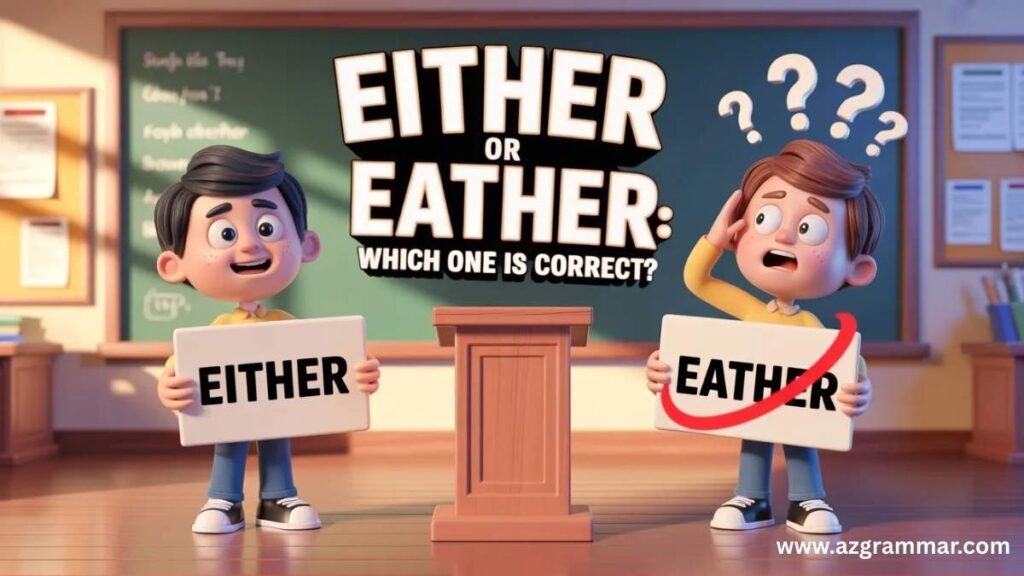
Ever typed a word, stared at it for ten seconds, and suddenly doubted everything you learned in English class? Welcome to the classic spelling dilemma: Either or Eather. One looks familiar, the other looks suspiciously right, and your brain decides to take a coffee break. Is “eather” secretly a word nobody told you about, or is your keyboard playing tricks on you? You’re not alone. Thousands of writers search Either or Eather every month just to make sure they aren’t committing a spelling crime. In this guide, we’ll settle the debate once and for all, explain the correct spelling, and show you simple tricks to remember it without second guessing yourself again.
Quick Answer: Either vs Eather
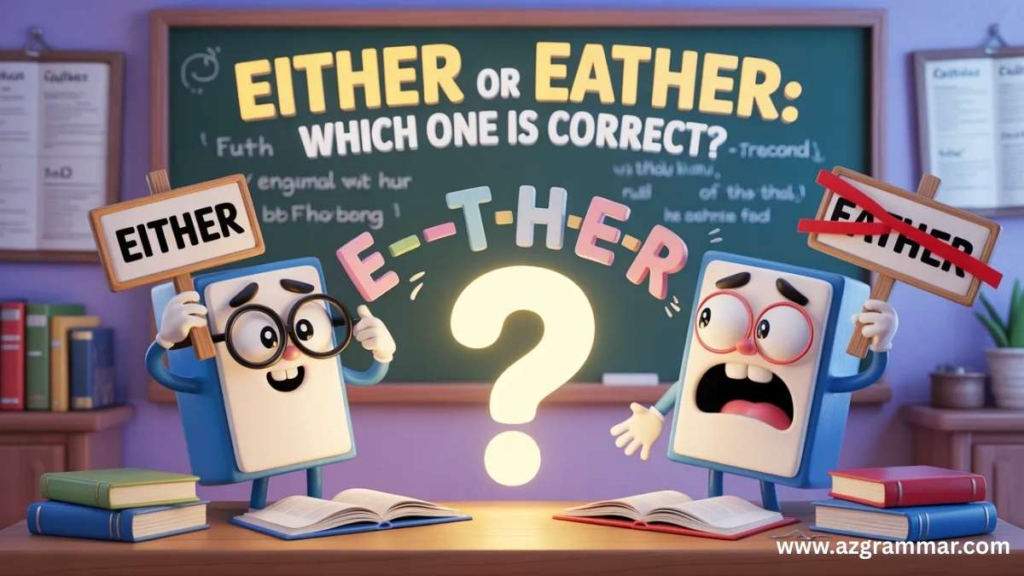
One of these words is correct English. The other is a spelling trap many writers fall into.
The correct spelling is either.
The spelling eather is incorrect and appears only as a mistake in writing.
| Word | Correct? | Meaning |
|---|---|---|
| Either | ✅ Correct | One of two options or alternatives |
| Eather | ❌ Incorrect | Common spelling mistake |
The word either is widely used in English grammar to describe a choice between two options or to add agreement in negative sentences.
Examples:
- You can choose either option.
- I don’t want tea either.
The spelling eather has no dictionary recognition and does not appear in formal English writing.
Messege or Message: What’s the Correct Spelling?
Why People Confuse Either and Eather
The confusion between either and eather is not random. Several linguistic and psychological factors make this mistake common.
Similar Pronunciation
The word either can be pronounced in two ways:
- EE-ther
- EYE-ther
Because of these variations, many people spell the word based on sound rather than spelling.
This leads to incorrect forms like eather.
English Spelling Inconsistencies
English contains many irregular spellings.
For example:
| Word | Pronunciation | Spelling Surprise |
|---|---|---|
| enough | enuff | gh |
| though | tho | gh |
| either | ee-ther | ei |
Because English spelling does not always match pronunciation, writers sometimes guess the spelling incorrectly.
Typing Errors
Fast typing often causes spelling mistakes.
People typing quickly might accidentally write:
- eather
- eiter
- ether
Without careful proofreading, these errors remain unnoticed.
ESL Learning Challenges
For English learners, spelling often depends on sound patterns.
Many languages have phonetic spelling systems, where words sound exactly like they are written. English, however, developed through centuries of linguistic influence from Latin, French, and Germanic languages.
As a result, learners sometimes write eather because it seems logical.
Meaning of “Either” in English
Before using a word correctly, you need to understand what it means.
The word either expresses choice, agreement, or possibility between two alternatives.
Most dictionaries define either as:
One or the other of two options.
However, the word can function in multiple contexts.
Common Meanings of Either
| Usage Type | Meaning | Example |
|---|---|---|
| Choice | One of two options | You can choose either plan |
| Negative context | Both options excluded | I don’t like either movie |
| Additional meaning | Also / too | I don’t want coffee either |
Let’s explore these meanings in more detail.
Bearing or Baring: How to Use It Correctly
Choice Between Two Options
This is the most common usage.
Examples:
- You can take either road.
- Choose either book.
- Either solution will work.
In this context, the word emphasizes two possibilities.
Negative Context
The word also appears in negative sentences.
Example:
- I don’t like either movie.
Here, the meaning becomes not one and not the other.
Additional Agreement
In casual conversation, either can mean also.
Example:
- I don’t want dessert either.
This usage appears frequently in spoken English.
Grammar Roles of “Either”
The word either performs several grammatical functions in English.
It can act as a:
- determiner
- pronoun
- conjunction
- adverb
Understanding these roles helps writers avoid grammar mistakes.
| Grammar Role | Function | Example |
|---|---|---|
| Determiner | modifies noun | Either option works |
| Pronoun | replaces noun | Either is fine |
| Conjunction | shows alternatives | Either tea or coffee |
| Adverb | adds negative agreement | I don’t like it either |
Either as a Determiner
When used as a determiner, either appears before a noun.
Examples:
- Either answer is correct.
- Either solution will work.
- Either road leads to the city.
The determiner limits the noun to two possibilities.
Either as a Pronoun
As a pronoun, either replaces a noun.
Examples:
- Do you want tea or coffee?
Either is fine. - Which route should we take?
Either works.
Here, the word refers back to two previously mentioned options.
Either as a Conjunction
One of the most common structures in English grammar is:
either…or
This structure presents two choices.
Examples:
- You can have either tea or coffee.
- We will travel either tomorrow or next week.
This construction appears frequently in conversation and writing.
Either as an Adverb
In negative sentences, either means also.
Examples:
- I don’t want pizza either.
- She doesn’t like cold weather either.
This usage helps reinforce negative statements.
Pronunciation Guide: How to Say “Either”
Pronunciation often causes confusion between either and eather.
Interestingly, both major pronunciations of either are correct.
Two Common Pronunciations
| Pronunciation | Region |
|---|---|
| EE-ther | American English |
| EYE-ther | British English and some American speakers |
Both forms appear in everyday speech.
For example:
You can choose either option.
Some speakers pronounce it EE-ther, while others say EYE-ther.
Both remain grammatically correct.
Why Pronunciation Causes Spelling Mistakes
The difference between EE-ther and EYE-ther can confuse learners.
Because spoken English varies widely across regions, writers sometimes guess the spelling.
This is how incorrect spellings like eather appear.
Is “Eather” a Real Word?
Many writers wonder if eather might simply be an alternative spelling.
The answer is clear.
Eather is not a real English word.
No major dictionary recognizes this spelling.
| Word | Dictionary Recognition | Usage |
|---|---|---|
| Either | Yes | Standard English |
| Eather | No | Spelling error |
Major dictionaries including Oxford, Merriam-Webster, and Cambridge list only either as the correct spelling.
Whenever you see eather, it is simply a mistake.
Naive or Nieve: Which One Is Correct?
Word Origin and Language History
Understanding the history of a word often clarifies its spelling.
Origin of “Either”
The word either comes from Old English.
Original form:
ægther
Meaning:
One or the other of two
The word eventually evolved through Middle English before becoming the modern spelling we use today.
Evolution of Spelling
| Period | Spelling |
|---|---|
| Old English | ægther |
| Middle English | either |
| Modern English | either |
Although pronunciation evolved, the spelling remained stable over centuries.
This historical consistency explains why the word appears unusual to modern learners.
How “Either” Is Used in Sentences
Real examples help clarify how the word works.
Everyday Conversation
Examples from daily communication:
- You can choose either restaurant.
- Either answer makes sense.
- I don’t like spicy food either.
These sentences appear frequently in casual conversation.
Workplace Communication
In professional settings, either helps express options.
Examples:
- You may submit the report either today or tomorrow.
- We can hold the meeting either online or in person.
Clear communication often relies on words like either to define choices.
Academic and Educational Writing
Students also use the word frequently.
Examples:
- Either theory explains the results.
- Students may choose either research topic.
Teachers often encourage precise grammar when using these structures.
Literal vs Emphatic Uses of Either
The word either can express literal choices or emphasize negative statements.
Literal Choice
Used when selecting between two options.
Examples:
- Either road will take you to the city.
- You may sit in either chair.
The word clearly presents two possibilities.
Emphatic or Negative Agreement
The word can also reinforce a negative statement.
Examples:
- I don’t want that either.
- She didn’t understand the instructions either.
This structure appears often in spoken English.
Either vs Neither: Understanding the Related Pair
These two words often appear together.
| Word | Meaning | Example |
|---|---|---|
| Either | one of two options | Either answer works |
| Neither | not one or the other | Neither answer is correct |
Grammar patterns:
- Either…or
- Neither…nor
Examples:
- Either you study now or you study later.
- Neither the manager nor the assistant attended.
These structures provide balance in sentence construction.
Common Spelling Mistakes Writers Make
Spelling mistakes with either appear frequently online.
Common incorrect spellings include:
- eather
- ether
- eiter
These errors usually occur because of pronunciation confusion or typing mistakes.
Many digital writers skip proofreading, which allows such errors to spread.
Simple Memory Tricks to Spell “Either” Correctly
Fortunately, remembering the correct spelling is easy.
Tricks 1: Either and Neither
Both words contain ei.
Example:
Either – Neither
This pairing helps reinforce the correct spelling.
2: The Phrase “Either or”
The phrase either or appears frequently in English.
Example:
Either coffee or tea.
Remembering the phrase helps lock the spelling into memory.
3: Visual Association
Think of the sentence:
Choose either option.
Visualizing a choice between two paths helps reinforce the meaning.
Together vs Togather: What’s the Correct Word?
Real World Examples of Either in Communication
Once you notice the word, you will see it everywhere.
Social Media and Casual Writing
Examples:
- You can pick either outfit.
- I don’t like that movie either.
Short, informal messages often include this word.
Business and Professional Communication
In professional communication, the word clarifies decisions.
Examples:
- You can attend either session.
- Please contact either manager.
Businesses rely on precise language to avoid confusion.
Education and Training
Teachers frequently use the word when presenting options.
Examples:
- Students may answer either question.
- Either solution demonstrates understanding.
Usage Trends and Search Insights
Modern search behavior reveals how frequently people question either vs eather.
Thousands of monthly searches focus on spelling questions like:
- either or eather
- correct spelling either
- how to spell either
This trend reflects a broader pattern in online language learning.
Writers increasingly rely on search engines to confirm spelling and grammar rules.
Reference Cambridge Dictionary Definitions
Here’s a trusted source for clear Grammar:
FAQs
Is “eather” a correct word?
No. Eather is not a recognized English word.
How do you spell either correctly?
The correct spelling is:
E-I-T-H-E-R
What does either mean in English?
Either means one of two options or alternatives.
Is either a conjunction or adverb?
It can be both, depending on the sentence structure.
How do you use either in a sentence?
Example:
You may choose either option.
Why do people spell either as eather?
The mistake happens because of pronunciation confusion and typing errors.
What is the difference between either and neither?
Either refers to one of two choices.
Neither means not one and not the other.
Final Thoughts:
The confusion between Either or Eather is more common than many people realize. The good news is that the solution is simple. Either is the correct spelling used in standard English. Eather is only a spelling mistake that usually happens because of pronunciation confusion or fast typing.
Understanding how either works in grammar makes the difference even clearer. The word helps express a choice between two options, appears in the structure either…or, and can also show agreement in negative sentences.
Whenever you feel unsure, remember the familiar phrase “either or.” If the spelling doesn’t match that phrase, it’s probably incorrect.
Use either confidently in your writing, proofread carefully, and this spelling mistake will never trouble you again.

James Walker is an English language educator and grammar enthusiast dedicated to helping learners improve their writing and communication skills. As an author at AZ Grammar, he simplifies complex grammar rules into clear, practical lessons suitable for students and beginners. With a passion for language learning and education, James focuses on making English grammar easy, understandable, and useful for everyday communication and academic success worldwide.
Email: azgrammar29@gmail.com
Website: azgrammar.com