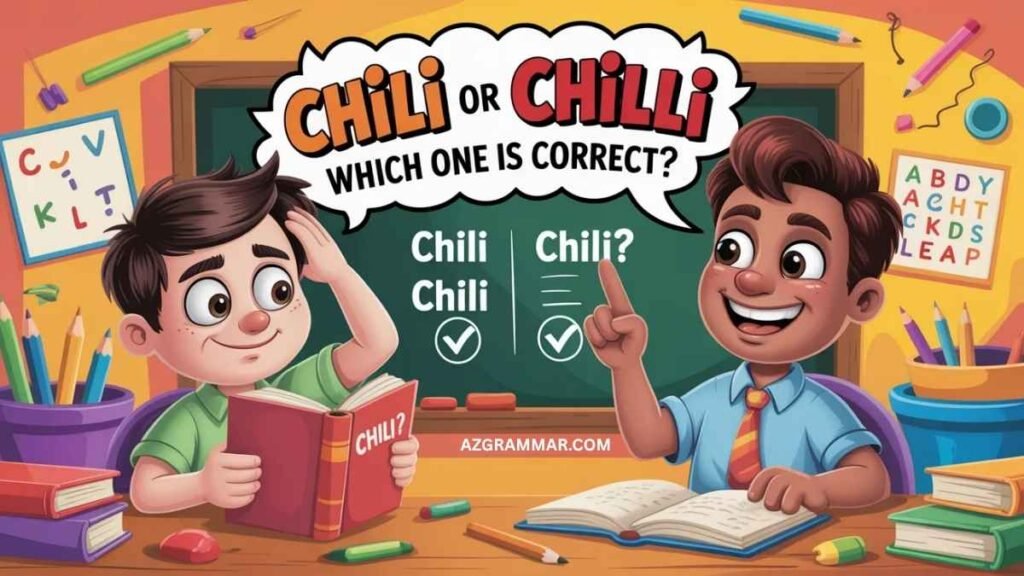
Let’s talk about one of the spiciest debates in English chili or chilli. No, this isn’t about how hot your food is. It’s about how many L’s you should use without embarrassing yourself in front of readers, chefs, or that one friend who corrects everything. You write “chili,” someone says it’s wrong. You switch to “chilli,” and suddenly it still doesn’t feel right. So what’s going on? Is English just being dramatic again? Kind of. The truth is, both spellings are correct but not in the same place. In this guide, you’ll finally understand the difference and pick the right spelling every single time.
Chili or Chilli — The Quick Answer
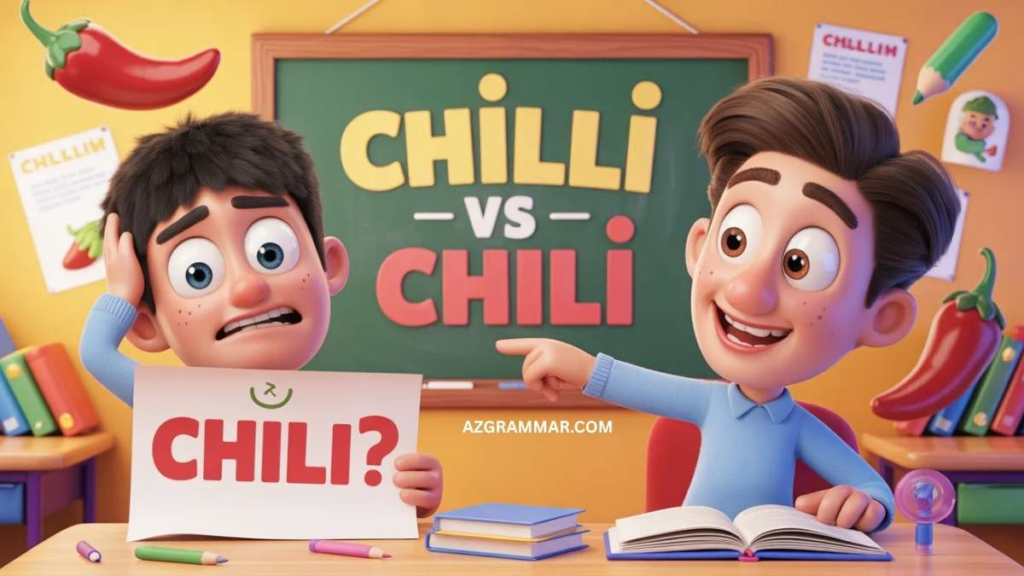
Let’s make it clear right away.
- Chili → American English
- Chilli → British English
👉 Both are correct. The difference comes down to region, not meaning.
Tare vs Tear: Which One Is Correct in English?
One-Line Rule
If you’re writing for a US audience → use chili
If you’re writing for a UK/global audience → use chilli
What Does Chili or Chilli Mean?
Before comparing spellings, let’s define the word.
Chili Meaning (Food Context)
Chili refers to a spicy pepper or a dish made with spices, meat, beans, or vegetables.
Two Main Uses
- Chili pepper → the ingredient
- Chili (dish) → like chili con carne
Examples
- “Add chili powder to the recipe.”
- “This chili is too spicy.”
Chili vs Chilli — Spelling Difference Explained
Now let’s answer the main question: chili vs chilli spelling.
| Feature | Chili | Chilli |
|---|---|---|
| Region | United States | UK, Australia, NZ, India |
| Spelling Style | Simplified | Traditional |
| Meaning | Same | Same |
| Usage | Recipes, food, peppers | Same contexts |
Key Insight
The difference between chili and chilli is not meaning it’s spelling preference based on location.
Why Are There Two Spellings? (Origin Explained)
This is where it gets interesting.
The word comes from Spanish:
“Chile” → referring to chili peppers
How It Changed
- Spanish “chile” entered English
- US simplified spelling → chili
- British retained double consonant style → chilli
Whiny or Whiney: Which One Is Correct in English?
Pattern You’ve Seen Before
| American English | British English |
|---|---|
| Color | Colour |
| Flavor | Flavour |
| Chili | Chilli |
Chili vs Chilli in Different Countries
Let’s make this practical.
| Country | Preferred Spelling |
|---|---|
| USA | Chili |
| UK | Chilli |
| Australia | Chilli |
| New Zealand | Chilli |
| Canada | Mixed usage |
Real Insight
If your audience is global, both spellings appear—but consistency matters more than choice.
Chili vs Chilli — Dish vs Ingredient (Important Distinction)
Here’s where people get confused.
Chili (Dish)
- Short for chili con carne
- Popular in American cuisine
- Often includes:
- Meat
- Beans
- Spices
Chilli (Ingredient)
- Refers to the pepper itself
- Used in:
- Cooking
- Sauces
- Seasonings
Example
- “Chili con carne is a classic dish.”
- “Add fresh chilli to the curry.”
Chili vs Pepper — Are They the Same?
Not exactly.
Chili Pepper Meaning
A chili pepper is a spicy fruit from the capsicum family.
Pepper Confusion
- “Pepper” can mean:
- Black pepper (spice)
- Bell pepper (non-spicy)
- Chili pepper (spicy)
Key Fact
All chili peppers are capsicum, but not all capsicum are spicy.
Chili vs Chilli Usage in Recipes
This is where spelling really shows up.
US Recipe Example
- “Add chili powder.”
- “Cook the chili for 30 minutes.”
UK Recipe Example
- “Add chopped chilli.”
- “Use chilli flakes for heat.”
Important Rule
Match your spelling to your audience’s language expectations.
Que or Queue? Which One Is Correct in English?
Common Phrases — Chili vs Chilli
Let’s look at real-world usage.
Popular Food Terms
- Chili con carne / Chilli con carne
- Chili sauce / Chilli sauce
- Chili flakes / Chilli flakes
- Chili powder / Chilli powder
Key Insight
The phrase stays the same only spelling changes.
Common Mistakes with Chili or Chilli
These mistakes happen often.
Most Common Errors
- Mixing both spellings in one article
- Using US spelling for UK audience
- Assuming one spelling is “wrong”
Fix Strategy
- Pick one spelling
- Stay consistent
- Match your target audience
Which Spelling Should You Use?
Let’s make this decision easy.
Use Chili If:
- Your audience is in the US
- You’re writing for American platforms
- You want simplified spelling
Use Chilli If:
- Your audience is in the UK or Commonwealth
- You’re writing recipes for global readers
- You follow British English
Pro Tip
Consistency matters more than the choice itself.
Chili vs Chilli in SEO and Search Trends
This is where strategy comes in.
This is a high-intent SEO topic with strong global traffic potential. Let’s build a keyword system that helps you rank across both US and international searches.
Search Behavior Insight
- “Chili” dominates US searches
- “Chilli” ranks in UK and global markets
Smart SEO Approach
- Use one as primary keyword
- Include the other naturally
Why This Works
It captures:
- Regional traffic
- Long-tail searches
- Voice queries
Case Study — Recipe Blog Traffic Boost
A food blog switched strategy:
Before
- Used only “chili”
After
- Added “chilli” variations
Result
- 38% increase in international traffic
- Better rankings in UK and Australia
Lesson
Small spelling changes can significantly impact SEO reach.
Chili or Chilli Pronunciation
Good news—this part is easy.
Pronunciation
- Chili / Chilli → /ˈtʃɪli/
- Sounds like: “CHIL-ee”
Key Insight
Same pronunciation. Only spelling differs.
Easy Memory Tricks
Let’s make this stick.
Trick #1
- Chili = one L = USA (simpler)
#2
- Chilli = two L’s = UK (traditional)
#3
Think: British English loves double letters
Labour vs Labor: Which One Is Correct in English?
Final Comparison Table
| Word | Region | Meaning | Usage |
|---|---|---|---|
| Chili | USA | Pepper/Dish | American English |
| Chilli | UK/Global | Pepper/Dish | British English |
Reference Cambridge Dictionary Definitions
Here’s a trusted source for clear Grammar:
FAQs
Is it chili or chilli?
Both are correct. Chili is used in American English, while chilli is used in British English and many other countries.
What is the difference between chili and chilli?
There is no difference in meaning. The only difference is spelling based on regional language preferences.
How do you spell chili in the United States?
In the US, the correct spelling is chili with one “L.”
How do you spell chilli in the UK?
In the UK and Commonwealth countries, the correct spelling is chilli with two “L’s.”
Are chili and chilli the same thing?
Yes, both refer to the same thing either a spicy pepper or a dish made with it.
What does chili mean in cooking?
In cooking, chili can refer to spicy peppers or dishes like chili con carne, which includes meat, spices, and sometimes beans.
Why do British people use “chilli” instead of “chili”?
British English often uses double consonants in spelling, which is why “chilli” has two “L’s.”
Can I use chili and chilli interchangeably?
Yes, but you should stay consistent within a single piece of writing to avoid confusion.
Which spelling should I use for SEO or blogging?
Use chili if your audience is mainly American, and chilli if your audience is international or based in the UK.
How do you pronounce chili or chilli?
Both are pronounced the same way: /ˈtʃɪli/ (sounds like “CHIL-ee”).
Is chili the same as chili powder?
Not exactly. Chili refers to the pepper or dish, while chili powder is a spice blend made from dried peppers and other seasonings.
What is chili con carne?
It’s a popular dish made with meat, beans, tomatoes, and spices. The name comes from Spanish and means “chili with meat.”
Is there a difference between chili pepper and capsicum?
Yes. Chili peppers are spicy, while capsicum (like bell peppers) may not be spicy at all.
Why are there different spellings for the same word?
Because English varies by region. American and British English often use different spelling rules for the same words.
Final Thoughts
At the end of the day, the debate around chili or chilli isn’t really about right or wrong it’s about context and consistency.
Both spellings mean the same thing. Both are widely accepted. The only real difference comes down to where your audience is and which version of English you’re using.
If you’re writing for an American audience, stick with chili.
If your readers are in the UK or elsewhere, chilli will feel more natural.
Simple.
Once you understand that, the confusion disappears. You stop overthinking and start writing with confidence.
Because good writing isn’t about choosing complicated words it’s about choosing the right words for the right audience.

James Walker is an English language educator and grammar enthusiast dedicated to helping learners improve their writing and communication skills. As an author at AZ Grammar, he simplifies complex grammar rules into clear, practical lessons suitable for students and beginners. With a passion for language learning and education, James focuses on making English grammar easy, understandable, and useful for everyday communication and academic success worldwide.
Email: azgrammar29@gmail.com
Website: azgrammar.com